Showing posts with label special education. Show all posts

Friday, August 25, 2017

AL School Official: Segregate Disabled Students to Help Test Scores

From Alabama:
Is it against the law for us to establish perhaps an academy on special education or something on that order," asked Bell, "so that our scores that already are not that good would not be further cut down by special-ed's test scores involved?"
When Bell's colleagues mentioned LRE, she didn't seem to understand. "It doesn't matter about that. You can make it the least restrictive environment," she said, "I'm trying to see if you can move them out."
The whole testing world drives ableism. Also ableism drives the testing world and its focus on assessing IQ. School officials have long been using various tricks to drive out disabled students from their testing pool. Charter schools are often based on the premise that they can keep out the "difficult" students and crow about testing scores.

So yeah, this woman's remarks are a problem and she should resign. But she's a symptom of a much bigger disaster behind the scenes.

Thursday, January 12, 2017

IEP at SCOTUS: Endrew F. vs Douglas County

It's almost impossible right now to keep up with all the stories circulating. Congress is defunding the ACA. The Republicans voted down an amendment against mandating coverage of people with pre-existing conditions, condemning millions of people to an early death, if that actually ends up being law. Donald Trump's banana republic press conference demands a unified response from the press, and not to mention that until he releases his tax return, we should assume he is financially compromised by both Russia and China, and will make his military decisions based on his personal financial wellbeing. I haven't even gotten to the vaccination story yet. We're overwhelmed.

Next week, I hope to write more about being overwhelmed and some thoughts from the Berlusconi era in Italy on how to respond (I've been waiting for someone else's piece to emerge).

In the meantime, SCOTUS heard a case that could prove vitally important to special education across the country. Special education is federally mandated, but was never funded (it was supposed to be funded, but you know Congress ...).

There's a very real chance that the Supreme Court will rule that school districts must go beyond "de minimis," meaning education that takes us beyond the minimum possible, to a standard “aimed at significant educational progress in light of the child’s circumstances.” That would, to my reckoning, represent an enormous judicial push to improve special education standards across every school district in America.

And then ... well, then there will be a lot of local battles between family and schools to come. But the IEP process is already so fraught, so filled with litigation, that I have a hard time believing it'll get worse.

Here's SCOTUSblog on Endrew F. v Douglas County:
At today’s oral argument in the case of a Colorado student with autism, one thing seemed relatively clear: The justices were dissatisfied with the U.S. Court of Appeals for the 10th Circuit’s ruling that school districts can satisfy federal education law as long as they offer a student with a disability an educational program that provides him or her with a benefit that is more than merely de minimis, or non-trivial. It was less clear exactly what standard (if any) the justices might substitute for the “more than merely de minimis” standard, but a standard “with bite” – as Justices Ruth Bader Ginsburg and Elena Kagan put it – would be a welcome development for children with disabilities and their parents.
A standard "with bite" could be pretty good. It's not inconceivable that this SCOTUS could provide such a thing.

And yet ...
Despite Fisher’s efforts to focus the justices on the text of the statute, they remained skeptical. Justice Anthony Kennedy expressed concern about what new costs Fisher’s proposed standard might impose on school districts, by requiring them to provide additional services, while Justice Stephen Breyer worried aloud about the propriety of the justices – who, he suggested, “don’t know much about” education – creating a standard that could then be interpreted differently by “judges and lawyers and people” all over the country.
Chief Justice John Roberts flagged a different potential problem, echoed by Kagan: How would Fisher’s proposed standard work for students who, because of their disabilities, may not be able to follow the general educational curriculum? Suggesting that there is some “flexibility” in the IDEA, Fisher advanced a slightly different version of his proposed standard: A student’s IEP should generally “be tailored to achieve a general educational curriculum at grade level”; if that is not possible, the IEP should use alternative benchmarks that are “the highest possible achievable by the student.”
So what's going to happen? Who knows, but here's the key possibility:
Today’s argument ended with the justices on the horns of a dilemma, as they so often are. Despite excellent advocacy from all three lawyers, there is no clear and easy answer. But they seemed sufficiently unhappy with the “more than merely de minimis” standard that they are likely to strike it down. The standard proposed by the federal government – which would require the school district to offer a program “aimed at significant educational progress in light of the child’s circumstances” – seems to be the most likely replacement, both because the justices regard it as most consistent with existing law and because it comes from the Department of Education, which – as Breyer noted – has expertise in issues related to education and the IDEA. And even if it’s not the standard that Drew and his family are advocating, they would no doubt nonetheless regard it as a significant victory. A decision in the case is expected by summer.

Wednesday, July 20, 2016

Wisconsin Senate Race: How Does the ADA apply to Private School Special Ed Programs?

There's a disability-related twist in the Wisconsin Senate race.

Ron Johnson, as I understand it, has advocated both for special-ed private-school vouchers and keeping the federal government from inspecting such programs. Russ Feingold is against vouchers and, if we're going to have them, at least advocates for them being regulated.
Wisconsin U.S. Senate campaign rivals Ron Johnson and Russ Feingold disagree over Johnson’s plan to limit federal enforcement of the Americans with Disabilities Act at taxpayer-funded private voucher schools.
Johnson, the incumbent Republican, said his proposed amendment to a spending bill would curtail U.S. Justice Department probes into disabled students’ rights at the voucher institutions. The plan comes after a four-year investigation of Milwaukee's voucher program... 
Johnson denied his measure would harm disabled Children. But Democratic challenger Russ Feingold accused Johnson, in effect, of saying disabled students at voucher schools don't deserve equal protection.
If this develops, I might take a trip across the border, eat some cheese curds, and try to learn more.

Monday, June 6, 2016

Secretly Recording in School - Ardmore OK case proceeds

I've been following a case in Ardmore, Oklahoma, about parents who suspected that their child was being mistreated in school, so they enabled recording on the child's "talker" device. Abusive language was, in fact, recorded, and the parents sued. The school has tried to block the use of the recorded content, but so far has failed in court.

Here's a report.
An associate district judge has rejected the appeal Ardmore City Schools filed in Carter County District Court seeking to quash evidence connected to a federal lawsuit filed against the school by the parents of a severely disabled child.
The appeal sought a ruling to suppress recorded evidence the parents had obtained from their non-verbal child’s (computerized) “Talker” while he was in class at Charles Evans Elementary School. The school argued the recordings violated the state’s Security of Communications Act. The school also alleged the parents “set out to obtain evidence about what was happening during the course of the (child’s) school day …” and complained the parents never revealed they were using the child’s “Talker” to obtain audio or visual recordings nor obtained the school’s permission.
I wrote on some of the issues relating to abuse and surveillance here, for CNN.  I'm troubled by the need to record, but I can't argue with the parents seeking evidence, especially in the case of a non-verbal child or a child whose testimony won't be believed (due to ableism).

Friday, May 6, 2016

A New Jim Crow: Disability and Racial Segregation in Georgia "Psychoeducational" Schools

This is a must read piece on the use of "psychoeducational" schools to segregate predominantly black children in Georgia from their peers.
At age 7, David was too much for his teachers to handle. So they decided to send him to a special program — unique to Georgia — called a psychoeducational school. He was like so many others already there: male, diagnosed with a behavioral disorder — and black.
Georgia’s public schools assign a vastly disproportionate number of African American students to psychoeducational programs, segregating them not just by disability but also by race, an investigation by The Atlanta Journal-Constitution found.
Black children form the majority at programs where teachers restrained children with dog leashes, where psychologists performed behavioral experiments on troubled students, and where chronically disruptive students spent time in solitary confinement, locked in rooms with bars over the windows. In one such room, euphemistically called a “time-out” area, a 14-year-old boy hanged himself.
Fifty-four percent of students in Georgia’s psychoeducational programs are African American, compared to 37 percent in all public schools statewide, the Journal-Constitution found. In half of the 24 programs, black enrollment exceeds 60 percent. In one, nine of every 10 students are African American.
The state and the individuals who make up the state respond differently to black behavior than to white behavior, accommodating the latter and segregating the first. There's a DoJ suit pending, because this is likely illegal under federal law.

Many of these students have complex needs requiring sophisticated supports. Some, perhaps, might need less time in mainstreamed classrooms. But these programs function as warehouses for kids no one is truly serving. Here's a quote from Mary Wood, who founded the program:
Wood stressed treatment, along with rigorous data collection that allowed her to evaluate the effectiveness of various therapies.
Over time, she said, funding decreased and priorities shifted. The programs compiled less data, and the people in charge placed less emphasis on mental health treatment.
“Behavior management, behavior control, and making sure they’re going to achieve what they’re supposed to achieve on testing” is how Wood, now retired, describes GNETS.
“The therapeutic dimension has disappeared,” she said.
The schools dispute this assessment, of course, and also denies that race plays any factor in placement.
On Sept. 18, Tonyi went to the school to meet with teachers and a behavioral specialist. Approaching David’s classroom, she said, she heard crying, then her son’s voice: “You’re hurting me, you’re hurting me.”
An aide had pinned David to the floor, Tonyi said. The woman was digging her fingernails into David’s hands, saying, “Do you understand? Do you understand? Do you understand?”
“Get your f-ing hands off him,” Tonyi yelled, and teachers called for a school police officer. Tonyi wanted to press charges against the aide, but the woman said David had thrown a timer at her.
The police officer ended up escorting Tonyi out of the building.
Regular readers of my work, including my CNN piece yesterday, know this kind of treatment happen around the nation. Abuse is a fundamental aspect of segregated education, but Georgia does seem to have specific problems.

Special education placement in Georgia, as with other states, seems to function as an element of what Michelle Alexander dubbed, "The new Jim Crow."

Friday, March 25, 2016

The Disabled Child Body as Object

A teacher in this video knocks a child with "special needs" over with her knee, because he was pausing at the door to the classroom and she wanted him to get inside. It was probably an accident, she just wanted to prod him along. When he gets up, she talks above his head to the adult in the room as she keeps pushing the child in the back.

She's resigned and been arrested. Video at the link. It's distressing in its casual violence, but not graphic.

The child's body here is just treated like an object. He's a non person.

I have become a pro-surveillance partisan in "special education" classrooms. I just can't see any other way to stop the abuse.

Good tweet here:

Wednesday, September 30, 2015

A Day in the Life at Chicago Public Schools - Special Ed

A local story went national yesterday. A mother arrived at school to find her child separated from the other kids and wearing a garbage bag. According to the mother one official defended the practice by saying since there was no rule explicitly against it, it wasn't actionable.

Meanwhile, Chicago Public Schools is cutting vast sums of money from special ed in an unprecedented way (after the school year has already started).

Mark Brown, at Chicago Sun-Times, went to CPS' press conference and wrote that this is a calculated move to push kids out of special ed. Special ed is expensive.

In a Facebook post, quoted with permission, activist and former mayoral candidate Jesus Chuy Campuzano agreed. He posted this picture of a slide which demonstrates how CPS is planning to tear apart their special ed program.


Image Description: Who are our Diverse Learners in CPS?
The majority of students with disabilities in CPS qualify for services
because of a specific learning disability (50.4%). For the most part, these students have
average or above average intellectual ability (IQ) and should
be learning with their peers.

I also have a number of other stories from parents I hope to be sharing in a forthcoming piece. It's not good.

Wednesday, December 10, 2014

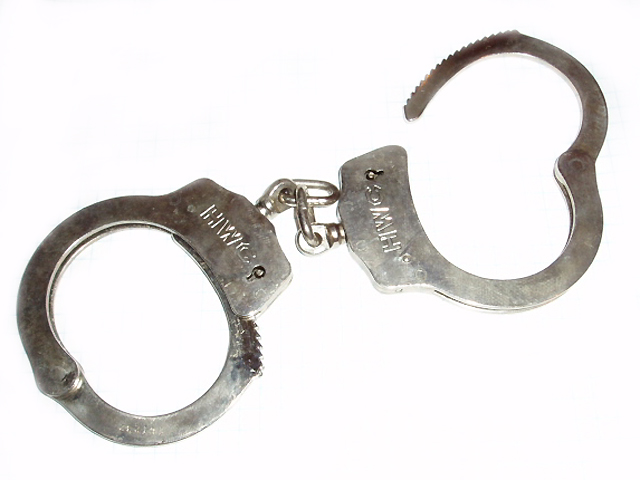
Restraints - Handcuffs on 6 year old is a sign of failure and #cultofcompliance

In Georgia, a 6 year old with special needs was placed in handcuffs:
When a Georgia mother arrived at her 6-year-old son’s school last week in response to a call that he was misbehaving, she was greeted by a shocking surprise: Her first grader was in handcuffs.

Lakaisha Reid’s 6-year-old son Patrick is a special needs student at Pine Ridge Elementary in Stone Mountain, Ga. On the morning of December 5, Reid got a call from the school asking her to pick up her son and bring him home early. “They said he wasn’t having a good day,” Reid tells Yahoo Parenting. “My husband and I walked into the school and heard my son yelling and screaming.” The couple found him in a room on his knees with his hands cuffed behind his back. The school resource officer was standing behind Patrick, holding him in place.
In Washington, a 6 year old with special needs has been told he can't ride the bus without, basically, a straitjacket. 
Dean's son, Wyatt, is a first grade student the Hood Canal School in Skokomish. The 6-year old was diagnosed with oppositional defiant disorder, a behavioral issue, when he was younger, Dean says, and has had discipline issues on the school bus.
The family now faces a tough decision: allow Wyatt to be restrained on the bus or find alternate transportation to school.
"It just flat-out violates everything as far as any civil rights I would think anybody would ever have," Dean said.
The district calls the restraints a "safety vest," and says it only uses them after multiple discussions with both a child and the parents, Superintendent Shawn Batstone said Tuesday. Parents must sign off on use of the restraints before they are deployed.
Behavioral issues can be really challenging for everyone, including the child in question. I don't know all the specifics of either case. I wonder, though, why there isn't a 1:1 aide for Wyatt on the bus? Why use a transportation system that requires the bus driver to do anything but drive? My son does not have specific behavioral disorders, but for the first year he had an aide on the bus every day (we put him on the regular bus as a means of increasing his degree of inclusion).

Mostly, I just want to say this: Any intervention, accommodation, or response to special needs that ends up with handcuffs on a six year old is a FAILED INTERVENTION.