Showing posts with label salaita. Show all posts

Sunday, September 14, 2014

Sunday Roundup - Boycotts: NFL, GoFundMe, University of Illinois


Get it? It's a roundup! 
Today is Sunday. I am not watching the NFL. 

For me, being a football fan was a major part of my identity, one that intensified with the advent of Fantasy Football. As the concussion scandal intensified, I began to scale back my engagement with the game. First quitting fantasy, then we moved the TV upstairs in a (failed) attempt at less screen time for the kids, so I just didn't have the games on all Sunday.

You can say, as someone did on my Facebook wall, that my moral compass is lacking because I didn't stop watching football earlier, but it's hard to shed pieces of your identity. I was a fan. 

The domestic violence issue - not just Rice, but the people who beat women NOT on video tape who happily are playing today, followed by the Adrian Peterson story of beating his child with a stick, has made me finally turn off the NFL. I cannot promise I won't turn it on again, but not today.

My feeling is that the NFL enables a culture of violence, through its embrace of pain and fear as motivations, it teaches that pain and fear of pain is how you solve problems: With kids. With spouses. With each other. The NFL glorifies violence and it shouldn't surprise anyone that the violence extends outside the stadium. I have no idea what they can do about it, either, so I'm not watching.

Not watching is different than demanding a boycott. I think it would be good if everyone in America turned off the NFL for an hour on Sunday. I have no expectations that will, or can, happen. I'm not saying what ethical decision you make if you turn on football today, but I hope more people think hard about it.

Other boycotts have a better chance of effect.

I will not contribute to any GoFundMe campaigns started after 9/9/14 until they treat abortion the same way they treat all other personal medical procedures. 
Now this pledge I think you SHOULD make. I'll write more about it this week and try to drum up more awareness about the problem.

I also wrote three posts about Steven Salaita and the boycott of UIUC: Reactions to his press conference, which I attended. Thoughts on duality of the position of Israel as a superpower and the Jews as an oppressed minority, which I think lies at the hearts of our debates about whether Salaita is punching up or down.

Finally, I am crowdsourcing information on how the final rubber-stamp approvals work at universities with which many of my readers are associated. I said:
I am shifting my attention to an issue on which I think we can all agree: Final approval for a job cannot take place weeks after a professor has started his or her classes.
Can you please, in a comment, in an email, on my public facebook thread, or even on twitter tell me the timing of your final reviews for new hires at your school? I need to get a sense of how common this kind of delayed rubber stamp is.
I think this is really important and now is a moment we can focus on these practices and, at least in some case, change them.

Finally, I had a brief Q&A with John Scalzi on his newest book, last Monday. Feels like a long time ago before all my writing descended into this fairly grim place. Yay interesting speculative fiction. Reading fun stuff - Now that's a good way to spend a Sunday.

Saturday, September 13, 2014

Crowdsourcing: Hiring Timelines with Boards of Trustees/Regents/Visitors Approval

As surely all of you know by now, the hiring then unhiring of Steven Salaita at the University of Illinois has highlighted many important issues for higher education. Much of the discussion has, correctly, focused on how we may and may not discuss Israel and fundamental questions about academic freedom and faculty governance.

As the case heads to the courts, I am shifting my attention to an issue on which I think we can all agree: Final approval for a job cannot take place weeks after a professor has started his or her classes.

Whatever you think of Steven Salaita, there is no way that an acceptable system can involve having to quit your job, prepare to travel across the country, start teaching, and then find out a few weeks later whether you're actually hired. Ian Bogost has thought through some of the consequences in his piece on "Academic Paydom," (a play on academic freedom).

Meanwhile, boards are getting more active, as discussed in these two pieces.

SO - I NEED YOUR HELP

I will be spending the next week doing some research on the timing of final reviews of hires at universities. I am going to be calling Midwestern state schools (just to keep the project doable), but I need help with the broader context. Crowdsourcing is notoriously unscientific, but it does provide with a way to get a sense of the scope of these practices.

Can you please, in a comment, in an email, on my public facebook thread, or even on twitter tell me the timing of your final reviews for new hires at your school? I need to get a sense of how common this kind of delayed rubber stamp is.

Thank you.

Tuesday, September 9, 2014

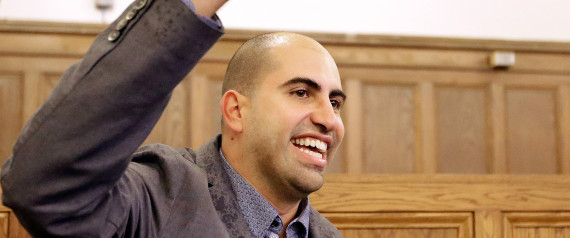
Steven Salaita's Press Conference - My reactions.

Today Steven Salaita gave a press conference. I was there. Full video here.

Salaita spoke, along with with his constitutional lawyer Maria LaHood, one of his employment lawyers, Robert Warrior (chair of American Indian Studies), and Michael Rothberg from English (who read a statement from the MLA).

You can read Salaita's statement here.

I'd like to offer a few key thoughts as an initial summary, in chronological order.

LaHood
  1. LaHood said that in just the last few years, there were over 200 cases of people at universities being reprimanded, fired, or even litigated against for making anti-Israel statements. She argued that this is sign of a persistent attempt to silence critics of Israel in American higher education. Palestine Solidarity Legal Support will be publishing a study on this in the next month. 
  2. Salaita's lawyers also call this a termination. Their legal strategy is that Salaita was, in fact, already hired, so this is unjust firing.
Salaita
  1. Salaita himself said many things in his statement worth noting, but you can just read it. His comments on twitter, the real-time nature of it, his teaching record, his concern about academic freedom as a principle, and more. Seriously, it's not long, go read it.
  2. I am struck by how committed he remains to UIUC and his lifetime of scholarship spent challenging orthodoxies. So, here he is now, challenging orthodoxies.
  3. He also revealed that his offer letter specifically references UofI adherence to the 1940 AAUP principles of academic freedom. I've confirmed this is standard. Everyone associated with the AAUP today agrees the UofI violated those principles. Are they going to keep sending that out in the offer letters when they are under AAUP censure (if it comes to that)?
Robert Warrior

In a few ways, his comments were more informative about the process than Salaita's statement
  1. Chancellor Wise didn't engage with Salaita's whole twitter stream, but accepted the cherrypicked inflammatory statements as proof positive that Salaita was not acceptable for UIUC.
  2. Wise initially said that Salaita's social media use "would be monitored" so as to make sure he wasn't using university property to tweet about Israel. Chilling.
  3. Most disturbing, Wise said that Warrior needed to tell Salaita (video here), "We live in a town, we have to shop together, at Target, at Sam's Club, we have to follow a different set of rules." Collegiality is, I think, barely an acceptable norm on which to judge colleagues - i.e. can we function together as a body. Whether we're nice at Target is no way to run a major university hiring decision. In fact, it's not an acceptable way to decide about who to include in anything, not even your country club (though in fact it's just how such things work and perpetuate bias).  
Question and Answer Time
  1. Salaita and his lawyers are not considering any option other than reinstatement, including the possibility of a court injunction mandating reinstatement. He absolutely wants to work at Illinois, even after all this.
  2. His employment lawyer looked eager to do some document discovery and deposing of people. Given the lack of care with some of the statements already made public, I'd be worried if I were in the Chancellor's office. After all (this is me, not the lawyer), they can just settle and avoid discovery, but it takes two to settle. Salaita might choose not to do so anytime soon.
  3. "Do you support the boycott?" - A long long pause, followed by the answer, "I do." After, Salaita explained that he just didn't want to say anything that made it sound like it was his action. He supports all free speech, the freedom to dissent in any number of cases, not just his.
  4. If this case is really not about the donors, but about civility, then the chancellor and trustees should sit down with Salaita and have a dialogue, rather than reading angry tweets and angry letters from donors and letting them decide the situation.
Let me add a few thoughts. As of August 1, I hadn't really heard of Steven Salaita, although I knew something vaguely was going on at Urbana-Champaign.  Like many others, I read his tweets and thought they were harsh, but defended his hiring on the grounds of academic freedom and public engagement. I still believe in those grounds.

But it is increasingly clear that Salaita is an open and engaging teacher who welcomes all evidence-based arguments regardless of viewpoint. UIUC would be lucky to have him in the classroom. As a taxpayer of Illinois, I certainly don't want the state paying hundreds of thousands (or whatever number emerges) in order to have him NOT teach.

More on this to come. 

Monday, August 11, 2014

Resources: The Firing of Steven Salaita

For my non-academic readers, over the last week there's been a big story about academic freedom in the age of Twitter. An arab-American professor lost a job, it seems, because he was rude about Israel on Twitter. There's lots to say here and I am working on several essays. Here are some resources.

 First, on the firing, then some reactions (there are lots and lots more), and then the ways that conservative media write about conservative professors who encounter, they say, prejudice for their political beliefs.

As always with these resource posts, please let me know what I missed either in comments (which work better now), facebook, twitter, or email. Thanks.

Prequel


News on Salaita Firing
Some Reactions
  • Electronic Intifada roundup.
  • Mondoweiss compares to Seeger and Robeson.
  • Change.org petition calling for reversal.
  • David Palumbo-Liu in Salon with his reaction.
  • Daily Caller hangs up its trophy.
  • Corey Robin. I don't even know where to start as he's been deeply involved in the story. Maybe here.
  • AAUP reactions from Illinois and Nationally (and former AAUP president Cary Nelson applauding Salaita's firing)
  • FIRE points out the timing between a 7/22  defense of Salaita and the pocket veto of the hiring.
Conservative Complaints about Conservative Profs being fired/discriminated against or calls for liberal profs to be fired.

Meta-article on the position of conservatives in the American university. Most important piece I've read on the topic It is written by a serious conservative. It accesses lots and lots of data. It acknowledges the divide in numbers between liberal and conservative profs, but says:
Looking at survey data from all of higher education’s primary constituencies, I began to realize that Republicans and conservatives, while vastly outnumbered in academia, were, for the most part, successful, happy, and prosperous. Fewer than 2 percent of faculty (Republican or Democratic) reported being the victims of unfair treatment based on their politics. Only 7 percent of Republican faculty believed that discrimination against those with “right-wing” views was a serious problem on their campus, compared with 8 percent of Democratic faculty who expressed concerns about discrimination against those with “left-wing” views. Asked to consider what they would do if given the opportunity to “begin your career again,” 91 percent of Democratic faculty and 93 percent of Republican faculty answered that they would “definitely” or “probably” want to be a college professor. Similarly, few rightleaning students or administrators claimed to have been the victims of political mistreatment. Like their Democratic counterparts, most were satisfied with their experience in higher education.