Showing posts with label gender. Show all posts

Wednesday, August 23, 2017

What's Going On At InBev?

Yesterday, Pacific Standard published a piece of mine on medieval brewing and lack of gender diversity at Google. I mostly talked about medieval history and the Bennett-thesis on patriarchal equilibrium. But as I reached the end of the draft, I started doing a little research into contemporary brewing, tipped off by a friend that there had been a lot of comment about gender and craft beer.

Indeed there has been! Although home brewing codes masculine in our culture, there's been lots of emphasis lately on supporting female-owned craft breweries. At the same time, though, the huge beverage company InBev has been buying up craft breweries, so I went to look at their management team. Its a vast global enterprise, with divisions all over the world. Not a single woman is in charge anywhere. I wrote:
Back to brewing—the craft beer revolution of the last few decades has provided opportunities for women to enter the industry, despite the modern cultural associations of beer with manliness. The Pink Boots society, an organization dedicated to supporting women in the beer industry, has been growing over the last decade. But patriarchal equilibrium is rearing its head in that industry as well, not because individual men are driving out individual women, but because Big Beer is attacking Craft Beer. Right now, Anheuser-Busch InBev, the beer giant, is purchasing craft breweries. There's not a single woman on its management team.
It's important to identify and work against individual acts of discrimination. The gender consequences of InBev offer another way to look at the big picture of gendered (and other forms of) discrimination.

READ THE WHOLE THING.

Sunday, July 17, 2016

Ken Burns' Historians on Donald Trump: Old white guys mostly

This all started because noted cranky scold Stanley Fish wrote a New York Times piece chiding historians for having opinions about Donald Trump as historians. Here, read Erik Loomis take it apart over at Lawyers, Guns, and Money. Honestly, the original essay makes no coherent argument about why it's not ok to use one's expertise to make arguments and is best dismissed as another example of Fish's mastery of the fine art of concern trolling.

Fish wrote his piece because Ken Burns, the filmmaker and historian, started a Facebook page called Historians on Donald Trump. It presents 21 history professors, mostly via video, assessing Donald Trump. The video currently at the top, by David McCullough, has 2.7 million views. Others have views ranking from around 5K to 500k or so. This is not a minor endeavor. Each post begins by listing the credentials of the interview subject (which is what irked Fish), and they are super impressive. Pulitzer prizes. Best sellers. Distinguished titles at elite universities.

There are only 3 women, one of whom is a Latina (Vicki Lynn Ruiz)*
There is one Latino (Albert Camarillo)*

There is not a single African-American historian (not to mention an Asian-American historian, anyone identifying as a Muslim, or anything else to diversify this collection of scholars).

Ken Burns is a savvy, rich, well-connected image maker. While the profession skews white and male, especially in US presidential history, there are in fact many people with superb credentials at elite universities who are 1) not white men and 2) would be powerful voices speaking against Trump. I hope, if Burns continues this project of lending his platform and expertise to historians seeking to make public comment, he'll diversify.

EDIT: Historian Leah Shopkow pointed me to the "Trump syllabus" at the Chronicle of Higher Ed which a  brilliant letter to the editors called, "As white as the man himself." A very analogous situation and, from the letter, links to resources for more diverse comments on the Trump phenomenon.

* Note: I don't know these two historians and am making assumptions about how they identify.

Saturday, March 19, 2016

Annals of Patriarchal Equilibrium: The Alewife and the Park Director

In the book History Matters, as well as the focused studies on which the book is based, Judith Bennett discusses the curious history of the medieval village alewife. She tracked the way that the internal ale-based economy worked, then, as ale shifted to beer, suddenly men took over the field. It turns out that beer, which kept better, could be made as a high value commercial product. With more money and status involved, women were gradually squeezed out. They lacked the capital to parlay their expertise in ale into commercial beer production. Moreover, the arrival of beer closed off some of the benefits of the less formal ale-economy that local women enjoyed.

Bennett used this case study as one of her examples of what she defined as the patriarchal equilibrium. Her argument is that sure, women's experiences of work and wages have changes over time, but that the relative status of their work has remained flat. The great work transformations - women heading into the factories in the early industrial period - may look different in kind, but in status, nothing has really changed. When a field's status rises, men take it over. When women enter a field, the status/remuneration drops. That's the patriarchal equilibrium.

Yesterday, New York Times reporter Claire Cain Miller wrote a piece on the same phenomenon:
Once women start doing a job, “It just doesn’t look like it’s as important to the bottom line or requires as much skill,” said Paula England, a sociology professor at New York University. “Gender bias sneaks into those decisions.”
She is a co-author of one of the most comprehensive studies of the phenomenon, using United States census data from 1950 to 2000, when the share of women increased in many jobs. The study, which she conducted with Asaf Levanon, of the University of Haifa in Israel, and Paul Allison of the University of Pennsylvania, found that when women moved into occupations in large numbers, those jobs began paying less even after controlling for education, work experience, skills, race and geography...
A striking example is to be found in the field of recreation — working in parks or leading camps — which went from predominantly male to female from 1950 to 2000. Median hourly wages in this field declined 57 percentage points, accounting for the change in the value of the dollar, according to a complex formula used by Professor Levanon. The job of ticket agent also went from mainly male to female during this period, and wages dropped 43 percentage points.
England seems more sure this is about intentional gender bias, whereas Bennett, working in a remote period, argues a little more abstractly about broader patriarchal forces. Still, the phenomenon tracks across time.

Thursday, February 11, 2016

Women and War (and Public Scholarship) - Medieval Style

I've been caught up in my disability journalism lately, but don't want to neglect some of my other passions  - medieval history and helping academics share their expertise with wider audiences.

Over the past few weeks, a number of outlets have passed around research - just a working paper really - that argues women rulers are more violent than male. It's a classic case of correlation without context. On the Society for Medieval Feminist Scholarship mailing list, a long thread emerged pointing out all the ways this research was either wrong or misguided in its findings. I offered only this - anyone on that list who wanted to publish an oped could contact me within 24 hours and I'd help them craft a pitch, critique their essay, and try to help them find the right editor.

I mention this only because I extend my offer to you, dear reader. If there's a timely story and you are willing to hustle (and willing to be rejected), contact me and I'll see what I could do.

Here's Katrin E. Sjursen's first piece for The Atlantic on what medieval history really shows about female rulers. It's an outstanding piece of public scholarship, detailed and interesting, teaching me things I didn't know, hopefully shaping our national discourse around women, history, and power.
Hillary Clinton’s victory in Iowa marks the first time a woman has won the presidential caucuses there. Enter the latest round of gender-based speculationsabout female candidates’ inherent pacifism versus their over-compensating hawkishness. With Clinton in the presidential race for the long haul, now is definitely—finally—a good time to throw out the binary competition between passivity and warmongering that always seems to be ascribed to female leaders. There’s no need to cram women—including Clinton—into one-dimensional categories: History demonstrates that women employ multiple and complicated approaches to leadership.
Politically active women thrived in the Middle Ages—as queens, duchesses, countesses, and so on—because the medieval period seated political power within noble families, and women were members of those families. Medieval history may not be the obvious source for an examination of active women rulers—after all, books on the Middle Ages often center on the infighting between kings and their knights, while increasingly misogynistic monks produced diatribes against the wiles of women. Nevertheless, noble wives in the Middle Ages were regarded as co-rulers of territory, alongside their husbands, and were expected to participate in both political and military affairs even when their husbands were present and available. This expectation meant that medieval noblewomen had the opportunity to develop a personal ruling style.
Sjursen  wants us to discard the false binaries of women as hawk/dove, and instead embrace the complexity of gender and rule in both past and present. I look forward to her next piece!

Tuesday, October 13, 2015

A Medievalist Goes Public - Laura Michele Diener writes for Yes! Magazine

Laura Michele Diener is an associate professor of history at Marshall. She works on medieval textile history, and I first met her when she gave a terrific presentation on using textile creation in the classroom. Recently, though, I've become aware of her public writing on contemporary issues.

One of my theories about academics turning to public writing is that we don't have to limit ourselves to writing about our narrow subject areas. Yes, if something directly related to our formal expertise emerges in the news, we really should engage. But the process of becoming an expert, a teacher, a writer, a thinker, builds habits of mind and habits of articulation that can serve in countless endeavors.

Diener's experience exemplifies the possibilities. She's written two terrific pieces for Yes! Magazine  - First on mountaintop removal and second on rural women and domestic violence. In the latter, she writes:
Transformations like Howard’s are not easy to pull off in rural Appalachia, where poor roads, low incomes, and a fiercely traditional culture combine to leave women facing domestic violence in physical and emotional isolation. But a handful of nonprofit shelters and advocates have managed to make progress in this difficult setting.
The secret of their success seems to be listening carefully to the women they serve and then handcrafting programs for those women. The advocates have found that when it comes to domestic violence, a one-size solution does not fit all. It is important to consider community and culture in order to make real differences in the lives of domestic violence survivors, a lesson for shelters everywhere.
I spent much of the month of May visiting some of these rural shelters. Even though I’ve lived in West Virginia for eight years, as I drove into the state’s southern counties I felt like I was entering a different world. The six-lane highways turned into narrow roads curving around mountains. Trucks carrying lumber hurtled past me on the switchbacks. Densely green woods surrounded me with cool, still beauty, and the towns were few and far between. I lost cell service almost immediately. For me, the solitude seemed idyllic. But this kind of isolation can be deadly for a woman trying to escape from an abusive home, especially if she is responsible for children and animals.
I spoke with Diener and asked her a few questions about the process of writing these articles.

DP: How and why did you decide to start writing about contemporary issues in West Virginia?

LMD: I've been teaching Women's Studies classes at Marshall University since I arrived there in 2008. At first I kept those classes focused on ancient and medieval women, which is what I know best, but as I got to know my students, I realized what incredibly rich narratives they had to tell, and how rooted their experiences were in place. Through their stories, I started getting interested in contemporary regional issues such as the impacts of coal on the history and environment of Appalachia. 

Then in January 2014, there was a chemical spill in the state capital that poisoned the water of 300,000 people in nine counties. People were left without water for weeks, and questions about water safety still remain. It was a horrifying situation. I wanted to know how the water crisis affected people differently, depending on their situation--their age, income-level, etc . . . Being someone who likes to research, I started traveling around, interviewing people and taking pictures. It was a way for me to get to know my new state and to make sure that people's stories were being recorded. Each person I met opened up new questions for me and I've been writing about these questions ever since.

DP: How different was the process of writing the domestic violence story from your historical research?

LMD: I started by speaking with people I knew through my work with Women's Studies. We held a Women's Studies conference at Marshall last spring and I listened to a fantastic paper by Mandy Sanchez, a sociologist at WVU, about rural women and domestic violence. Her paper was focused on the positive steps that a shelter in Cambridge Ohio were taking to reach out to rural women. Her research reminded me of some of the shelters we had been working with through Women's Studies, particularly SAFE in Welch, WV, and the idea for the article came to me during the conference. So, I immediately called Mandy, and asked for some references, and then I started calling around to different state coalitions on domestic violence. 

Once I made some contacts, I drove out to the organizations and met people for interviews. In that sense, my process was pretty different from what I do as a historian, because it was all about making connections with living people. One conversation would lead to another, because everyone would say, "oh, you must talk to this person." At the same time, my historical research process is not that different, just with books instead of people, where one book leads to another.
DP: How did you decide on Yes! Magazine

LMD: I went to a rally called The People's Foot that was organized by a number of local environmental organizations that was held to call attention to the environmental and health impacts of mountaintop removal mining. It was really inspiring and I wanted as many people to know about it as possible, so I decided to write an article and just searched via google for a magazine that might be interested. 

After that first article, my editor at Yes! asked if I would be interested in writing a story about Appalachian women. I knew I wanted to write something that addressed pressing issues but also demonstrated some of the positive work that people are doing. 


Go read Diener's work!


Thursday, October 1, 2015

Hacks in Human Evolution: Menstruation

This was by far the most interesting thing I read yesterday: Menstruation as a Hack by science-writer Suzanne Sadedin.

She goes through the whole process by which human fetuses operate as parasites on their mothers (as opposed to in other mammals where the mother's control the process), thanks to the "ravenous hemochorial placenta." Therefore, she continues, mother's body needs more control over whether she gets pregnant, so has created an endometrium as a "lethal testing-ground which only the toughest embryos survive. The longer the female can delay that placenta reaching her bloodstream, the longer she has to decide if she wants to dispose of this embryo without significant cost."
The solution, for higher primates, was to slough off the whole superficial endometrium – dying embryos and all – after every ovulation that didn't result in a healthy pregnancy. It's not exactly brilliant, but it works, and most importantly, it's easily achieved by making some alterations to a chemical pathway normally used by the fetus during pregnancy. In other words, it's just the kind of effect natural selection is renowned for: odd, hackish solutions that work to solve proximate problems
 And like most hacks, my friend N. said, trying to deal with the kludge has caused so many more problems than if we had just fixed it in the first place!

So much for intelligent design.

Wednesday, September 23, 2015

The "Authenticity" Dodge

I met Arthur Chu this summer at a workshop on the problem of misogyny on the internet and we've been corresponding via email and social media a lot since then. Our writing interests overlap when it comes to representation issues in media and games. He interviewed me on the problem of claiming "authenticity" as a way to avoid diversity.

Here's an excerpt:
DP: When you start to create fantasy races and then you make the argument “Oh no people of color, we have to be realistic,” you’ve revealed your cards. You’ve shown that you just don’t want to have a diverse world, that you want to promote this myth of homogeneity, that you want to use historical reality to justify making a choice that makes other people upset.
AC: That’s interesting, because it seems we’re in an upsurge of interest in sword-and-sorcery fantasy–
DP: We sure are, it’s great!

AC: And it seems recently we have this appetite for “old-fashioned” narratives that center the West and reduce the rest of the world to antagonists or scary foreigners, even if it’s in a winking, ironic way. You’ve got the Lord of the Rings films that started the revival of high fantasy in film hewing close to Tolkien’s depictions of the Southrons and the Easterlings as sort of flat enemy races, and then you’ve got Game of Thrones using the Dothraki to bring back the trope of the barbaric Mongols. What do you think is driving this trend of the past ten years or so?
DP: Oh, to me it’s a much longer trend than that. Orientalism is built into 800 years of Western narrative production about the East. That the East is simultaneously more advanced and more decadent and more barbaric and more civilized all at the same time. And I think that the Orientalism of Game of Thrones is the perfect embodiment.

Thursday, March 19, 2015

Fight Body Issues by Reinforcing Patriarchy?

No.

No no no no no.

Also no.

According to a piece in The Telegraph (a right-wing British newspaper. Do Not Link used here), here's how to fight body image issues among girls:  A doctor and author says teachers should ask boys to tell girls what boys find attractive. Then girls will realize that boys like girls with some fat, because of evolution and child breeding. And all the girls who fit within those new standards of beauty will feel great.

1. It is true that people find many body types attractive and that the single-type of female beauty betrayed [Edit - I meant portrayal. I'm leaving this Freudian slip in] is not the sum total of "what is attractive."

2. This is a terrible idea.

Here's the key quote:
To fight a “neurosis” amongst school girls on body fat, teachers should get boys to tell girls what they find attractive, including other qualities beyond pure looks, said Aric Sigman, author of “The Body Wars: why body dissatisfaction is at epidemic proportions”.

He said it was important that teachers picked boys from an older year group because girls look up to them and they are not direct peers so it would be easier to talk about body image issues.

“It would be helpful for them to explain that what they find attractive is not just physical qualities but also qualities like caring, the sound of a girl’s voice and her body language.
Science stuff follows.

This is fine in a way, except that it reinforces the patriarchal notion that what girls should be concerned about is to what extent they are or are not attractive to boys. Attractiveness remains the key arbiter of personal worth.

Instead, the way to fight body image issues is to de-legitimize the male gaze as the arbiter of what is and is not "good."

The notion that a girls' body exists to be attractive starts very young, the minute we call a girl baby pretty and put a pink hat on her (while the strong boy gets a blue one). I wrote about this issue when she was in pre-school, almost two years ago, on the occasion of her winning a "best dressed" award.

The other day, then, I arrived at after-school to find my daughter in a big loose school t-shirt because her pants were a little saggy. The teacher said that she "didn't want Ellie to fell uncomfortable." I guarantee you that Ellie didn't feel uncomfortable until the teacher told her that having too much of her body showing was something to feel uncomfortable about. My daughter is five. She does need to learn about privacy, but making her feel ashamed of part of her body being visible is not the way (in this case, the issue is two-fold: She doesn't have enough of a butt to hold up pants, and the tie had become snagged and wasn't re-tying).

I asked them, very politely, to let me know if there was a problem with her clothes and not to intervene directly in that way again, and discussed body shaming. And you know what, her feminist teachers were probably very upset, because they don't see the way they replicate patriarchal culture through these kinds of little micro-aggressions.

And we, of course, went out to buy more pants with better elastic waistbands.

Micro-aggressions matter. They build up over time, in tiny ways. I find the particular stresses of raising a girl in our culture to be very tiring, but I try to push back against the grain and hope it helps.

Sunday, February 1, 2015

Super Rowan - Anatomy of a Viral Tweet

It started when Rowan's father posted her letter to Facebook and encouraged people to share it. I said, "how viral do you want to go? Like, I know an editor at The Mary Sue, and other places." He replied, "Do it." So I posted it to the blog and made this tweet below. Then I tagged various high-profile people using the "link to the tweet" feature, so that they would RT the original if possible, and let the awesome content of the letter do the work.
This tweet has received well over 1000 re-tweets (RTs are the vehicle by which tweets spread from user to user). Related tweets (especially from @chriswarcraft on Twitter) have gotten dozens. The piece, which of course people have to click through to find, is the third-most read in the history of my blog, with thousands of views. It's been covered on HeroicGirls.comThe Mary Sue, Slashfilm.com, Comic Book Resources, Nerdspan (with the fun title - how DC Comics can make Rowan happy), Cinema Blend, and surely others.

DC Comics responded with the following two tweets (to their over a million followers):

The best piece of journalism on Rowan's letter came from The Daily Dot's Lisa Granshaw. I put Lisa in touch with Rowan's family, and Granshaw did a great job putting the letter in context, as well as answering some of the questions about how Rowan wrote it. Granshaw writes:
The lack of women heroes in a collectible set of Justice League chibi action figures inspired Rowan to write her letter. She told her parents one day that she spent her bus ride home from school “thinking about a letter she wanted to write to DC about these chibis.”
“She sat down right away and started to write," Renée said. "She stopped from time to time to ask her dad if a particular sentence sounded ok, but apart from that it was entirely her own work. In fact, she was a little worried that people wouldn't believe it was written by a kid, so we made sure not to interfere. But we were extremely proud of her for taking the time to write about something that was important to her, instead of just being frustrated about it.”
So - Rowan wrote this herself.  That's important to note, as a number of people in tweets and comments have implied or outright stated otherwise.

Also - she wrote it about DC because she likes DC. Yes, she could have written about gender issues in Marvel or whatever, but she likes the DC female characters and wants more of them.

Next, from the same piece, there's this:
“The things is, it's not that there are no female superheroes," Renée said. "There are lots of them, as comics fans know. But in terms of what's available for kids when you walk into Target or Toys-R-Us, the superhero world looks pretty exclusively male. That's frustrating for girls who are fans; the boys can wear their favorite superhero all the time, but to this day we've never seen a Hawkgirl T-shirt for kids. It makes the girls feel like they're not important in the comics world, and that's hard when it's something that they love so much. Frankly, Rowan doesn't like not being taken seriously.”
That's such a key point. Plenty of people (though a small fraction of the hundreds of interactions I've now had about this tweet) criticized the letter by pointing out how many female characters there were in the DC Universe. This doesn't in fact contradict Rowan's letter, but is Rowan's point. She loves Hawkgirl. Where's the Hawkgirl merchandise?

So next we see whether DC lives up to their tweeted promise. The letter is still rolling around the internet, and it wouldn't surprise me for it to pick up more steam if the right folks notice. It's also, as the many links above note, just part of a much bigger conversation about gender and comics, or gender and geekdom more broadly. Here are my questions.

1. What, specifically, does DC have planned to address the gender issues in their product lines? That's the easy question to answer.

2. Has DC done any hard thinking about the systemic issues behind the lack of strong product lines and shows for girls?

Because you can roll out six or seven new shows, movies, and more t-shirts. You can hire some women to write, do art, and direct. You can invest in diversity. But if you don't de-stablize the corporate culture that led you astray in the first place, that consistently de-emphasized female characters, or sexualized them, or put them only in pink and purple settings ... the new products and shows will likewise fall prey to that culture.

Good luck, DC. We'll be watching.

Update: Covered in the Telegraph. Covered by BuzzFeed. Covered by Mic.com. Headline News. Huffington Post.  The Independent. And many more. If you see an interesting one, let me know!

Update 2: At Mommyish.com, there's a good piece which makes the following point.

Meanwhile, just a few tweets later, the company posted this thrilling news about new animated projects with accompanying toy line-ups:
batman unlimited dc comicsCount ‘em up: that’s five dudes and exactly zero lady-people. The other project, not depicted in the Tweet, is a new version of the Justice League line-up, which has six guys and one token, albeit Wonder-ful, Woman. 8% women? Yeah, that ‘girl power’ is almost palpable.
I am as skeptical as this author.

Friday, January 30, 2015

Cradle To Grave Sexism: Colleen McCullough and Yvonne Brill

The Australian author Colleen McCullough died at age 77. The obituary in The Australian begins as follows:
COLLEEN McCullough, Australia’s best selling author, was a charmer. Plain of feature, and certainly overweight, she was, nevertheless, a woman of wit and warmth. In one interview, she said: “I’ve never been into clothes or figure and the interesting thing is I never had any trouble attracting men.”
The writer began the obituary by saying, basically, that she was unattractive and fat, but men still wanted to have sex with her and she was fun to be around.

This is, of course, sexist - it suggests that the first judgment of a woman must be to what extent she was or was not attractive to men.

We've been through this before. It reminded me (and no doubt many others), of the New York Times obituary of Yvonne Brill, rocket scientist. It began (it has since been edited, but the public editor commented here):
She made a mean beef stroganoff, followed her husband from job to job and took eight years off from work to raise three children. “The world’s best mom,” her son Matthew said.
But Yvonne Brill, who died on Wednesday at 88 in Princeton, N.J., was also a brilliant rocket scientist who in the early 1970s invented a propulsion system to keep communications satellites from slipping out of their orbits.
Here it's not to what extent did people want to have sex with her in general, but her maternal skills in the kitchen and child-rearing.

I wrote about Brill a few years ago when I put together a piece for CNN on the sexism my daughter was encountering as a four-year old. I wrote:
When the rocket scientist Yvonne Brill died in March,The New York Times celebrated her as the maker of a "mean beef stroganoff" and "the world's best mother." When my 4-year-old daughter, Ellie, a wildly creative and interesting girl, finished a year of preschool last week, her teachers gave her an award for being the best dressed.
This is cradle-to-the-grave sexism, always judging women by their appearance and the extent to which they do or do not conform to the gender roles assigned them by patriarchal norms. No accomplishment is as important as whether they were attractive. And read this explanation by the Times' obituary editor on Brill.
“I’m surprised,” he said. “It never occurred to us that this would be read as sexist.” He said it was important for obituaries to put people in the context of their time and that this well-written obituary did that effectively. He also observed that the references in the first paragraph to cooking and being a mother served as an effective setup for the “aha” of the second paragraph, which revealed that Mrs. Brill was an important scientist.
And the writer himself:
The writer, Douglas Martin, described himself as “just so full of admiration for this woman, in all respects.”
“I was totally captivated by her story,” he said, and he looked for a way to tell it in as interesting a way as possible. The negative reaction is unwarranted, he said — a result of people who didn’t read the obituary fully but reacted only to what they saw on Twitter about the opening paragraph.
It hasn’t changed his mind about how he wrote it: “I wouldn’t do anything differently.”
For these two male writers (I'm guessing white male, but I don't know them), the backlash was a surprise and unwarranted. They just wanted a good, "aha!" That, too, is a bow to patriarchy. Mother AND rocket scientist, aha! You never saw that coming, as most scientists are terrible mothers, and vice versa (the article suggests). The use of the surprise there reinforces the idea that such achievements are unusual.

Blank Gravestone. Blah.
Language matters. Internet writers are having one of those interminable debates in which successful white male writers say that telling them that language matters is really mean and fundamentally useless anyway, while tone policing feminist discourse down to silence. I'd refer them back to "how to be an ally," but I think step 1) Listen, is not really in their wheelhouse.

So instead we look at these obituaries. Fabulous, successful, women who cannot be remembered except through the context of patriarchal gender roles.


Friday, January 23, 2015

Video: The Power of Teamwork (Hulk Smash! Thor Hammer! O Captain My Captain?)

So I was going to write a post about another killing, but I'm tired. My son was up much of the night (he has a cold so his breathing isn't great so he's restless and wakeful). I have a lot of work to do today despite the exhaustion. So here's something great.

My daughter got some new action figures and asked me if she could make a movie. She's read a few starter-comics, but hasn't seen the cartoons (she's never really liked the superhero cartoons) and CERTAINLY not the movie (they are not kids' movies, people).


A few thoughts, beyond the joy.

1. These were bought in a set of three. I don't care about Iron Man. Where is Black Widow? Girls do need girl superhero toys. Also, boys can play with girl superhero toys. Superheroes are cool. [Related - Where is Gamora?]

2. Imagination is awesome. Feeding it is pretty much in the top-3 jobs of parenting (along with, oh, meeting basic needs and loving). 

Off to write. If I write enough, I can nap. If I nap enough, I might be a functional parent by the time my kids come home this evening, and then ... then we can play.

Thursday, January 15, 2015

Pockets

Ellie building the Lego "Research Lab."
My daughter, Ellie, who is 5: I wonder why people make pants without pockets. 

Me: It's because clothing designers believe girls don't need pockets.

Ellie: We should go to a clothing designer and say, 'Hey! Put pockets in girl pants.' And they'll say, 'Why? Girls don't need pockets.' And then we'll say 'They actually do need pockets because where will they put things?

So now you know.

I've written about my daughter and clothing before, including in the most viral piece I've ever written, on my daughter's "best-dressed" award.
A boy received best engineer. A girl got best friend. Another girl was the best helper, and another most compassionate. A boy received best break dancer. A girl was named most athletic, and the teacher told us how when all the class raced around the track this girl "beat everyone! Even the boys!" And then my daughter got her certificate, showing her in a funky orange sweater, tight pants, and holding a bowling ball. Her award -- best dressed.

Many decades after the feminist movement of the 1960s, why are we still stuck in this gender-norming rut?
I  finished the piece with this:
If my daughter's creativity shines through in her choice of clothing, then celebrate both that creativity and the critical thinking that lies at the heart of all creative acts with a most creative award. Or we could just let Ellie tell us what she wants us to celebrate. When she picked up her award, she beamed at the picture of herself holding the bowling ball so proudly. "Daddy!" she said, "I won best bowler!"
We have to empower our kids to tell their own stories.

And give them pockets to put things in! 

Thursday, October 30, 2014

"I don't see race" and "Not all men." - That Street Harassment Video

Yesterday, a video on catcalling went viral. Today, Hanna Rosin at Slate wrote a piece on how the editor edited out the white guys, making it a long string of black and Latino men harassing a white woman.
The video is a collaboration between Hollaback!, an anti-street harassment organization, and the marketing agency Rob Bliss Creative. At the end they claim the woman experienced 100 plus incidents of harassment “involving people of all backgrounds.” Since that obviously doesn’t show up in the video, Bliss addressed it in a post. He wrote, “we got a fair amount of white guys, but for whatever reason, a lot of what they said was in passing, or off camera” or was ruined by a siren or other noise. The final product, he writes, “is not a perfect representation of everything that happened.” 
I see this a lot. I hear it from the "Oh, I'm a humanist, not a feminist crowd." I hear it from the "I don't see race, just humans, crowd." I hear it from the "We need equality, not special treatment or affirmative action, just equality" crowd.

Such positions deny the inherent power dynamics at play in society.  Only those who are dominant can afford to be blind to them. Only those who are dominant can afford to shrug off editing out all the white guys and saying - well, what matters is the message about street harassment.

This video enables all the men who harass women in other ways to look at this and to feel smugly superior. It enables the cry, "Not all men," when the answer is Yes, all men.

All men. I am a feminist. I define feminism as a critique of the gendered power dynamics that govern our societies and then commitment to actions based on that critique. But I am not perfect. I am raised in a sexist culture. I am steeped in sexist media and messages. And sometimes, I do something sexist. Maybe I turn to look at a woman walking by. Maybe I don't intervene when "the guys" are chatting about a woman in a social space. Maybe I act in sexist ways in which I am not even aware.

I try to own it, to think hard about my actions, and to apologize if appropriate (often, the apology becomes another form of microaggression). I try to be intentional and aware and to do better, acknowledging the problems and the challenges.

That's why this video, though effective, may do more harm than good. Through editing, surely not intentionally, it suggests that street harassment is not a white-guy problem. Intentional doesn't matter. Only results count.

Sunday, August 31, 2014

Sunday Roundup - Police Violence, Gender Norming, Dissertations

It's been a busy week of writing and I hope you are enjoying this holiday weekend.

Most of the week was spent on the cult of compliance and police violence. I started with a piece on CNN on 4 police killings of people with mental health issues. I argued that we need to think about psychiatric disability - disability comes with protections and the need for accommodation - rather than illness. As usual, I added some blog followups.

I also wrote a post about four stories of police violence for "Living while Black." Black men attacked for sitting, not walking, raising hands, and keeping hands in pockets. One of the story also involves autism. Thank you to everyone who read it here or one of the sites on which I shared it.

I published an essay called "Save the Dissertation" (it saved me) on Chronicle Vitae, with a followup on the blog. There's a lot of talk in Higher Ed about reshaping graduate education, and no doubt a lot of reform is needed. But for me, the dissertation process, in all its turmoil, is how we become scholars. If we want to come up with new ways to do this, that's fine. We don't, however, get to test it out on grad students. Senior scholars at R1 schools - you go first. Then apply for grants, sabbaticals, chairs, etc. with the results and let us know what happens. 

I had two essays. The fun one was on Huffington Post and was about my approach to "parenting against the grain."  My daughter got an Avengers backpack. Some boys doubted it was hers. I also wrote a blog about my son and gender norming, and the complexities there (due to Down syndrome).

I also published a book review. It's got 2 errors I'm trying to have fixed. Overall, publishing blogs on HuffPo has been fun, but I'm not sure I get a lot more out of it than writing here. More on that next week.

Wednesday, August 27, 2014

Backpacks, Gender norms, and My Son

Yesterday, I had my first piece published on the Huffington Post. It's about my daughter's backpack.
The boy came down the hall just as I was arriving at preschool with my daughter, Ellie. In a voice filled with excitement, she said, "Michael [not his real name], come look at my new backpack! It's the Avengers!" Indeed it was, or at least the four male heroes. Thor, Iron Man, Captain America and the Hulk, in vivid color, charging forward to fight evildoers.
Michael responded with far too much skepticism for a 5-year-old boy. "You mean, you like Avengers? Or is that your brother's backpack?"
Ellie completely missed it. "No," she said, "My brother got Minions. I got Avengers!" Then she raised her arms in the air, blasting laser beams out of her hands at the bad guys, and ran off to her classroom. Evil doers, beware.
In the essay, I talk about parenting against the grain. It's not enough, I argue, to just provide choice, because all of society is telling children that they must conform, conform, conform. The process of gender norming accelerates once they start school. There is no free choice. Instead, we push gently against that dominant message, hoping to create enough space for Ellie to choose whatever she likes.

The clever reader will have noticed, "My brother got Minions." I've been repeatedly asked - what about boys? Do you push Nico towards Hello Kitty or whatever? Do you push boys against the grain too?

Off to school, backpacks rampant!
These are good questions. I, like my questioners, have the sense that a lot of people push girls towards boy stuff and push boys towards boy stuff too. Boy stuff is powerful! Girls wearing boy clothes are powerful! Boys wearing girl clothes ...?

The lack of balance reflects and intensifies the patriarchal nature of our society, rather than fighting it. On the other hand, I could never advise a parent to push a boy into a dress, because that's not a gentle parenting against the grain. That's trying to smash the barriers. The problem is that a girl in "boy clothes" is pretty standard. A boy in a dress is a target. How far should we go?

I have two thoughts.

First - "Against the grain" is about gentle pushing, not creating targets for bullying. For boys, I think, the key is to focus on behaviors. Soraya Chemaly, one of my favorite writers, writes about these issues a lot, such as in "the problem with boys will be boys." We need to enable our sons, we need to push our sons, to exhibit behaviors not typically associated with masculinity. When they cry, we need to comfort and love, not say, "boys don't cry." I think that's what parenting a boy against the grain looks like.

Second - I have no idea what parenting a boy against the grain looks like, because Nico has Down syndrome.

People with Down syndrome are by no means immune to gender norming, but Nico has very limited verbal skills. He's not getting the kind of language replication of gender norms that our daughter has been showing for years now. "Pink is a girl's color," she says. Nico is as likely to pick a pink, blue, purple, or orange bowl. Moreover, when he picks a bowl, our goal is to get him to say a two-word sentence like "purple bowl," rather than focusing on gender issues.

Moreover, our primary goal with Nico is to find things that stimulate him, and then push push push for reaction, speech, enjoyment, development, engagement. So whatever it is that grabs him, that's what we go for. We have played with baby dolls. We have played with trucks. Right now, though, it's a pretty equal balance between Frozen and Minions. You should see him stand in the middle of the room, swooping his arms around, singing to "Let it Go." I think the gender issues are going fine there.

Would I send my son to school in a Hello Kitty backpack? Absolutely. But I confess I'd be very nervous about it. Nico is already so marked as "other" by his disability and we - teachers, parents, Nico, his friends, his sister - work very hard to make sure that otherness doesn't become too pronounced. If he had picked one with Elsa, he'd be wearing it today.

But right now, Nico really likes minions.


Wednesday, August 13, 2014

Women and Science: Harassment and Dropping Out

A few weeks ago, I wrote a well-read blog post about girls and science. Apparently, we're still debating whether it's nuture or nature that drives women to choose professions other than science.

Two recent pieces in the national media provide more evidence for the ways that women get driven out of the scientific profession, as well as the continued questions of the meaning of that evidence.

First, from the New York Times, a piece on harassment in science. It begins with the author relating her experience (a senior prof booking a hotel room with only one bed for the two of them), then continues:
I’d forgotten about this experience from two decades ago until I read a report published July 16 in the journal PLOS One. Kathryn Clancy, an anthropologist at the University of Illinois at Urbana-Champaign, and three colleagues used email and social media to invite scientists to fill out an online questionnaire about their experiences with harassment and assault at field sites; they received 666 responses, three quarters of them from women, from 32 disciplines, including anthropology, archaeology, biology and geology.

Almost two-thirds of the respondents said they had been sexually harassed in the field. More than 20 percent reported being sexually assaulted. Students or postdoctoral scholars, and women were most likely to report being victimized by superiors. Very few respondents said their field site had a code of conduct or sexual harassment policy, and of the 78 who had dared to report incidents, fewer than 20 percent were satisfied with the outcome.
Fieldwork, it is clear, is a dangerous place to be a woman. It's also where you make your break your career and take your first steps. The piece ends with a powerful call for clear standards, pre-emptive anti-harassment policies, and most of all, people to be willing to call out their friends and colleagues. We cannot rely on the victim of harassment to challenge the system herself.

And yet, I suspect many people will not heed the call. NPR has a new piece on women in engineering.
Over the course of three years Nadya Fouad, a psychologist at the University of Wisconsin-Milwaukee, surveyed 5,300 women who earned engineering degrees within the past six decades in order to figure out why so few stayed in engineering. Fouad reported that only 62 percent of respondents were currently working in engineering. Those who left the field provided their reasons for doing so in the survey.

"It's the climate, stupid!" she said during her presentation, referring to the "old-boys club" workplaces that she says still exist in many engineering organizations.
Respondents in her study reflected her sentiments, with many calling the engineering workplace unfriendly and even hostile to women. They also said that they felt many of these companies did not provide opportunities for women like them to advance and develop.
"Women's departure from engineering is not just an issue of 'leaning in.' " said Fouad, lead researcher of the study. "It's about changing the work environment."
Changing the work environment, not just individual women taking action. What I thought was especially important, if depressing, was this response to her work:
Not everyone agrees with Fouad's findings.
"Women aren't leaving engineering to go and hide in a corner. They are leaving for many reasons which a study like this may not find," said Elizabeth Bierman, president of the Society of Women Engineers and an aerospace engineer for 20 years. "The work environment may be one reason but for the majority it is not the case."
Her organization recently conducted its own retention study and found that although women do leave the engineering workplace faster than men, they do so for a variety of reasons. Many of those reasons, such as lack of a work/life balance, also resonate with men, Bierman said.
The bigger problem facing women and engineering, she said, is getting more women into the engineering pipeline. Bierman says companies looking to retain both women and men should improve their work/life balance policies.
"We've found that women stay in engineering because they want to make sure they are making a difference," she says. "If women feel they are making that difference, retention levels will be higher."
Yes, make a difference. And how do they make a difference?

Well, first we have to change the climate so that women's work is valued, women are protected from harassment (oh, the stories I have heard from a few aerospace engineer friends, now all working in other fields), and we change the culture.

Choice is fine. Choice is stressed by everyone defending the lack of women in sciences. But when the pressure is coming at women through harassment, through bias, through diminishing women's work, through all the factors we know that run rampant in our patriarchal society, there is no real choice. You either go with the flow and find something else to do, or spend your life spitting into the wind (warning, mixing metaphors!). It's no surprise so many women drop out.

To end on a good note, for the first time in 80 years, the winner of the Fields Medal in mathematics, the "Nobel prize" for the discipline, is a woman! May there be so many more that it's no longer news.

Monday, August 4, 2014

"Daddy's Money" - A line of shoes for tween girls.


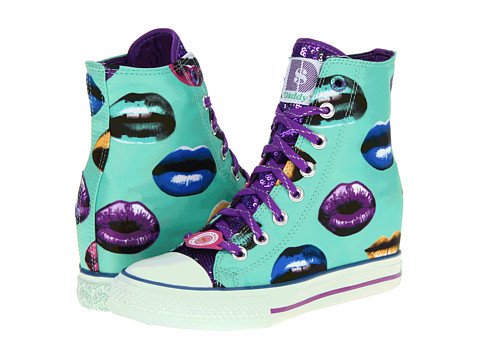
This is from Sketchers. It's called "Gimme Kisses" from the brand line "Daddy's Money." If you look closely, you can see a $ and the word Daddy above the laces. This one is called "Cha-Ching" is a pretty good looking shoe. The one covered in bling is "Gimme megabucks."

Why yes, I am writing an essay on gender norming and consumerism right now, why do you ask? 

Thursday, July 10, 2014

Something Old, Something New - The Medieval and Modern War on Women


“I respect you very much as a woman for your accomplishments. I even read that you studied medieval history, which I think will come in handy with trying to defend the Republican war on women.”
Liberal Radio Host Stephanie Miller to Carly Fiorina, failed Republican Senate Candiate, on CNN State of the Union, 7/6/2014.

On CNN last Sunday, Stephanie Miller used Fiorina’s degree in medieval history and philosophy from Stanford as an easy way to score a rhetorical point. Miller argued that the Republicans, especially in their views on women, are medieval, and medieval things, as everyone knows, are bad.

This idea that the Middle Ages were especially backwards doesn’t really hold up to close analysis, but it’s a pretty pervasive myth and I’m not surprised to see Miller use it. In fact, Fiorina has used that kind of language as well. In a keynote address in 2000, she labeled ignorant government regulators as medieval and celebrated cutting-edge tech companies as the heroes of the Renaissance.  

This is, of course, nonsense. 

The kinds of regulations to which Fiorina objects are a product of the development the modern state and economy. The heroes of the Renaissance frequently served tyrants in an era of terrible war and strife, though they produce beautiful art in a time of chaos, disease, and religious strife.

Despite this, if we take Miller seriously and think about what the study of the Middle Ages might tell us about gender discrimination, patriarchy, and health care in the wake of the Hobby Lobby decision, we might make two arguments. First, knowing about the past in fact does come in handy when trying to understand the present. Second, one of the things the past reveals is that dangerous parts of the war on women are very modern.

Let’s start with a medieval story about women and healthcare.

14th-c drawing meant to depict "Trotula,"
a female doctor. Miscellanea medica XVIII
Wellcome Library, London. CC-zero
In 1322, the all-male medical faculty of the University of Paris took Jacoba Felice to court for practicing medicine without a license. At trial, witness after witness attested to her skill and denied that she had ever asked for payment. The court nevertheless found her guilty and ordered her to refrain from practicing medicine on pain of fine and excommunication.

On the surface, this looks like a classic example of medieval patriarchy at work.  But if the Middle Ages last from 500 to 1500 or so (and some scholars would end the medieval much earlier), 1322 is actually pretty late in the period. This is important because it shows that the specific issues in 14th-century Paris are new. 

Before that point, the men and women of the city had trusted Felice, investing her with social capital, although that didn’t help her in the face of the law. After this, male doctors increasingly worked to ban women from practicing medicine solely on the basis of their gender. In fact, according to Monica Green,   Professor of History at Arizona State University, Felice’s case may have sparked the physicians’ practice of applying gender-based barriers to the profession, since competency was harder to argue (Felice being supremely competent).

A modern analyst could use the case to inform either right-wing or left-wing arguments. On the one hand, it’s a kind of overreach of regulation that served the vested interests of male physicians who felt threatened by Felice’s competition. On the other, the case features a corporate body (the medical faculty) that used the courts and the church to enforce gender norms and restrict women’s access to quality healthcare. In the wake of the Hobby Lobby decision, that latter analysis does seem especially relevant, even if it’s not one Fiorina would make. 

Beyond the relatively narrow confines of medicine, the story of Felice also says a lot about the power of the state and what happens when that power is leveraged to reinforce gender or religious norms. The “state,” as we know the term, really begins to take shape in what we call the “early modern” period (starting around 1500, more or less), but we can see the roots in moments like the trial of Felice.

On the other hand, at its height, the pre-modern state had nothing like the kind of power that the weakest government can exercise today. The richest men or groups had nothing like the kind of wealth that corporations and plutocrats hold. The medical profession may have achieved power over credentials, but the knowledge and invasive possibilities of medicine today would have seemed largely inconceivable to the pre-modern physician.

At the core, Hobby Lobby’s arguments against providing contraceptive care do reflect older Christian ideas about gender, religion, and power. They are dangerous not because they are old, however, but because of the intrusive power of modern technology to peer into our most intimate lives. They are dangerous because of the control that corporations have over their worker’s health, a truly bizarre accident of 20th-century American labor history. They are especially dangerous because of the vast wealth leveraged by powerful conservative men who want to enshrine their religious views into law.

This is a modern battle as we decide what kind of country we want this to be. We resist the forces behind the Hobby Lobby decision not by mocking them for being antiquated, but through the ballot box, the courts, public opinion, and even the ultra-modern tool of internet-organized consumer boycotts.

On CNN, Miller’s quip suggested that patriarchy, gender repression, and even would-be theocracy are problems of the past, that the “war-on-women” is some kind of throwback to a barbaric and long-past age.

If only that were true.


Thursday, June 26, 2014

Girls and Science - Makers vs a Scientific American Blogger

So Verizon and Makers teamed up to make a great new video about the insidious ways that we push girls away from science.


I am always suspicious of corporations getting involved in social causes, as they tend to be followers rather than leaders. Still, Makers is pretty great and I think the video highlights some typical ways that we push girls away from science, math, and so forth.

The takeaway is that starting very early, mostly without meaning to, our society (and especially parents, but surely friends and school and media and commerce and so forth) lets girls know that their place is NOT in the lab or the workshop or the field. It's socially constructed, it may well not be intentional, but it works.

This conversation matters because, much to my surprise, the fundamental premises are still subject to debate. This morning I was alerted to a post on Scientific American blogs, in which a psychology doctoral student named Chris Martin wants you to know that women are just naturally not so scientific, at least not when we're talking about the super-duper-smart people. He invests in the Larry Summers argument because he wants to debunk Neil DeGrasse Tyson, who when asked about women in science, gave a smart answer about race and science by way of analogy.

Martin writes, with intense disciplinary snobbery to my reading:
Neil deGrasse Tyson responded to the question quite well, but since he’s not a social scientist, he wasn’t able to draw on psychological research on gender differences. His answer focused on stereotyping and self-fulfilling prophecy effect. I don’t blame him the slightest for lacking expertise in an area outside his specialty, but I do think people who only watch that video could come away with a misconception about the impact of stereotyping. I’m not going to discuss self-fulfilling prophecies here—they have a weak effect—but I will talk about how recent research has addressed this question.
Yes, Martin argues, there might be a weak effect of stereotyping, but really it's not such a big deal. The key, he argues, is that there are plenty of women in science, but they tend to be in biology and psych, and most of them do not "choose" to go into academic careers. Martin wonders why.

I am not going to quote more fully. At the end, he nods to the notion that stereotyping might have a tiny bit to do with why women don't become scientists, but mostly he makes claims that in the context of the Larry Summers debate have been well discredited. Yes, it's not impossible that there are evolutionary factors that have a tiny effect on career choice. It's not impossible. But as said on twitter (quoted with permission):
We've been through this before.

There's a place for a smartly argued thoughtfully nuanced piece on the ways that evolution may in fact shape certain kinds of gender difference. This is not that piece. This makes these bold confident truthy statements claiming that the matter is resolved, and this man will tell how it really is.

It wouldn't matter. Except that it is on Scientific American's blogs, a major forum, and I suspect it reflects the beliefs of countless people in positions of authority, people who hire, people who train, people who run labs.

Here's the deal I'll make.

Let's get rid of all the stereotyping, all the micro-aggressions that drive girls and women out of science, the social messaging that women who nurture are the only real women, that pretty matters more than smart. The phrases in the video are real, I hear them, I see them in our media. Let's beat those back, and then we can see where the evolutionary gender differences really take us.

Because these stereotypes run deep. Sometimes, I feel them coming out of my own mouth, directed at my daughter. She'll be wearing a pretty dress, she'll be heading for the mud, she'll be doing something that might be a bit dangerous, and I'll find my words telling her to stop. And I'll be appalled at myself.

Then, even if my daughter's wearing a pretty dress, I hand her a shovel and we go out and dig for worms. I would dig out the science kit and do an experiment with her, but it turns out ... her mother is a scientist.

I leave the hard science to mom. 

Sunday, June 15, 2014

Sunday Roundup - All the News from Adjunct to Australia

It was a very good writing week for me. I pitched four columns, landed three, one of which came out immediately. I also wrote a first-draft treatment of a book (more on this later once it's ready). Most fun, I did an interview and part of  a call-in show with an Australian radio program! You can listen to it here.

My column was "The Most Interesting Adjunct in the World." The story of the Santa Clara Adjunct got lots of press when it happened. I saw it first here on Rebecca Schuman's blog as it emerged out of adjunct-related chat on Twitter. Within a few hours, the story moved quickly. Here's a piece from Vitae, but there are of other links, many citing my good friend Rick Gooden's tweets on the subject. Yesterday, driving out to a gig at a pub, the great Peter Sagal on Wait-Wait Don't Tell Me used it as a news item for a final question.

For those who missed the story, the short version is:
The posting, for an adjunct-lecturer slot at Santa Clara University, required applicants to have published at least 25 books, through top presses, on highly specific but varied topics; worked as a journalist; hosted radio and TV productions; founded startups; cultivated connections at Oxford University and throughout the Bay Area; and, perhaps most importantly, have some experience as a teacher.
TWENTY FIVE BOOKS. Ok, well, it turns out they were trying to hire a specific person. This is a fairly normal practice, but not usually in Adjunct Land. I was pleased, therefore, to write what I call a "next day" analysis piece (I was, I think, the person who alerted the Santa Clara PR director to the issue, as she was startled when I talked to her on the phone).

Here are some points from the column.

I am not opposed to inside hires in principle. Bifurcated job ads can be, however, a warning sign for a divided department. I wrote:
Tailoring job listings to internal candidates is a well-known practice, and inside hires are not necessarily a bad thing. I hear people complain that this type of hiring leads to departments settling for known quantities instead of pursuing excellence, but that’s not really my sense of things. The pursuit of prestige-laden superstars marks much of what is wrong at the top echelon of academic hiring, in which a few people get marked as geniuses and soak up enormous resources that might be more equitably distributed among many merely brilliant scholars and teachers. My experience is that the academic world is filled with smart scholars and good teachers, and if you have one who is doing a good job with your students, it’s reasonable to hire her. 
What's unusual is to see the language come to adjunct land. It reflects, perhaps, the normalization of adjunct labor as a central component to the higher education landscape, demanding an organized response from all of us, as I have written before. Adjuncts are not "adjunct" to our universities.

Along with my interview, I talked about fatherhood in other contexts. I need to get better about marketing myself as a fatherhood writer, because today is apparently Father's Day and I am not doing anything professional. I did pitch a column that didn't get picked up, which is fine and normal, then did other things. The use of the word "marketing" and "myself" makes me deeply uncomfortable. I am a terrible capitalist.

I wrote about the "Dads are incompetent" theme in our culture and what it says, as well as a longer piece about parenting against the grain, "Just say no to pink." I got plenty of pushback on that one, probably deserved, for coming off as femme-phobic. I'll have to keep working on how to articulate my agenda and using "pink" as metonymy clearly won't work. It distracts rather than helps. Maybe "Princess-culture?"

Other pieces were:

Thanks for reading. Please always point out mistakes I make and other things I might want to read.