Sunday, March 16, 2014

Sunday Roundup

On Sundays, usually, I try to round-up my week's posts and maybe draw attention to something that people missed. I naturally spent a lot of time on my CNN piece on rape culture and Down syndrome. I have received a lot of great feedback, did a radio interview, wrote a blog post on sexual agency among people with DS, and another on how I see the facts of the case (once again, let me re-iterate, I am neither lawyer nor law enforcement professional. That said, the lawyers who talked to me have more or less agreed with my reading of the case, often with scathing commentary about the ineptitude of the judge).

I'm very proud of the CNN piece. I've written plenty of pieces about gender and male feminism before for mass media, but never about rape. I wanted to get it right and hope I did. Some of the professionals working both in law enforcement and for organizations dedicated to ending violence against women have said nice things, so I'm feeling good.

The under-read piece of the week was about "Talking to Girls about Sex." It was really a plea to help fund Scarleteen, a site that does this important job better than anyone else I know of. Please help if you can.

I also wrote a post on code-switching and white male privilege in the classroom that got a lot of readership, mostly because Inside Higher Ed tweeted it out (I was responding to two of their essays).  One interesting response: A friend suggested that he was tired of the phrase "white male privilege," not because he didn't believe in it, but because it was too soft. White male privilege, he argued, should be called racism and sexism. I'm not quite sure. I think racism and sexism are the causes of white male privilege, and maybe we could emphasize that more clearly. Another friend and colleague wrote that she wanted to erode my privilege. Me too, me too! I wrote another post in the wake of an internet hubbub about Nazareth College rescinding a job offer on "fit" as a way to conceal bias - even to oneself!

For International Women's Day, I wrote about the discovery of Trisomy-21 and the all-too-familiar tale of a man stealing a female scientist's work. Down syndrome also featured in yesterday's piece on the challenges of inclusion, in which I thought about the difference between help and friendship. Reciprocity is the key, as is my continued mantra that inclusion is not same-ness.

It's been a year of public writing for me and a busy week on the blog. Thanks for reading, commenting, and sharing.

And if you are looking for something new to read - try this on the origins of college rankings. It's Galton's fault, of course!

Saturday, March 15, 2014

The Challenges of Inclusion (not same-ness): Friendship vs Help

My son rides the regular school bus, a step that we decided on this year. The system has been supportive. Nico's aide meets us at the bus stop and facilitates the ride. On the rare days when he takes the bus home, she's there (she has to take the bus anyway to get back to her car).

But there's also a girl named G. who is in Nico's class, and she's an outstanding helper. I discovered this the first time the aide wasn't able to make it (thanks to the terrible winter we've had here). So I brought Nico onto the bus and G. popped up from her seat, smiling at Nico, holding out her hands, and sitting with him. I've rarely been so deeply moved (although there was another girl, H., early in the year, who I wrote about. She's great too). Over the past month, Nico's independence on the bus has improved dramatically, and I think G. has a lot to do with it.

Lately, some behavior issues in transitions (running mostly) have been ameliorated by having peers, mostly girls, walk with Nico from place to place, holding hands, helping.

And yet, yesterday the Twitter user @think_inclusive linked to a fascinating article on inclusion called, "HELL-BENT ON HELPING: Benevolence, Friendship, and the Politics of Help." It comes from a pair of educational consultants and counselors focused on disability issues, and although the piece is from 1994, it instantly raised alarms about what I've been seeing at my son's school. It also, though, offers useful terms and categories of analysis to think about inclusion and its possibilities. In the end (spoiler alert), I think Nico and his peers are doing alright.

Here's the introduction of the article, opening with the social and policy changes that moved through schools in the 80s and early 90s (emphases mine throughout)
The move toward cooperative and inclusive education is part of a larger move out of social oppression for individuals with disabilities. It is part of a groundswell movement of social reform that holds as a central tenet the belief that all children, including those with disabilities, are capable of learning and contributing to their classrooms and communities.
This is the first generation of children with and without disabilities to grow up and be educated together. Consequently, within inclusive education we have come to entertain a cheerful optimism that the generation growing up now will be different than those of the past. We are hopeful that greater contact between children will begin to break down the barriers of misunderstanding and dispel the myths that have created society's response to disability.
It was a good hope and authors note some genuine progress:
At first glance, this change might seem to be taking place. Individuals with disabilities are more visible and increasingly involved in community life. If we believed that greater proximity led to greater acceptance, it could be argued that we are successfully participating in the creation of a new social order. Unfortunately, this is only partly true. Instead, we are finding that increased visibility and "presence" alone do not necessarily ensure that those with disabilities are fully included.
True inclusion is dependent on the development of meaningful and reciprocal relationships between children. As classrooms become increasingly diverse, new strategies are being developed to ensure that the new students are more than simply present. Friendship circles, school clubs and special buddy systems have been implemented as formalized attempts to foster interaction and develop relationships.
Meaningful and reciprocal relationships. That's such a simple but powerful phrase. I've been thinking about my son's relationships. There are typical kids who clearly like him, hang out with him, and indeed help him (like G.). Are the relationships reciprocal? That I'm not sure.

The piece then expands to thinking about agency, or lack thereof, by focusing on "help."
Our society still perceives those with disabilities as perpetual receivers of help. Descriptors like "less fortunate" and "needy," telethons, and tear-jerker journalism all continue to perpetuate this view.
Unfortunately, there is still a distressing tendency in some schools to base interactions with students on these broader societal misperceptions, despite a sincere desire to end the isolation experienced by so many children with disabilities. Friendship clubs and buddy systems based on stereotypical beliefs risk perpetuating prejudices and myths and even exacerbating the problem.
Obviously, it is essential that students be provided with opportunities to interact. Formalized friendship and support circles may be effective ways to building relationships. However, an over-emphasis on the "helper/helpee" relationship can easily skew the delicate balance of giving and receiving that is the precursor of true friendship. It is critical, then, to regularly and carefully examine the nature of the interaction we facilitate and the attitudes that inform it.
Finally, an example:
Consider the following scenario:
Four third grade children from a local elementary school have come to speak to a room full of adults. They've been invited, with their teacher, to talk about friendship. 
Three of the four children in the room can speak, one of them can't. Three of the four children in the room can walk, one of them can't. The three walking, talking children are here to tell us about their relationship with the young man in the wheelchair. 
Adults in the room begin to smile as the first classmate talks. Approving nods accompany the child's words, "He's different on the outside, but inside he's just like me." 
The conversation whirls around the boy in the wheelchair as he scans the room, looks at his communication board and sometimes watches his classmates. 
"We take turns being his buddy," offers one young girl. "Everyone has a turn."
As the children talk and answer questions, it is interesting to watch the interplay between the subject of the discussion and the girl to his left. She has one arm around his shoulders, and in the other hand holds a washcloth. She wipes his mouth repeatedly. At one point, he appears to lose patience and struggles a bit. One hand jerks forward. His friend seizes his and holds it still. He makes a noise of clear irritation, and attempts to pull his hand free. 
His classmate smiles fondly at him, continuing to restrain his hand, and wipes his mouth again. 
We heard the boy's three classmates being called "the hope for tomorrow" and "exceptional kids". All over the room, adults were beaming. After all, this relatively new phenomenon seems to hold out some hope for an end to discrimination and distance between those who have disabilities and those who do not. 
However, as the presentation continued, it became increasingly apparent that while both adults and children thought they were talking about friendship, much of the discussion taking place was really about help. While there was undeniable warmth between the children, most of the comments and non-verbal interactions reflected a "helper/helpee" relationship, not a reciprocal friendship.
The whole article is worth reading as it moves from laying out the problem to potential solutions, ways to build reciprocal relationships, and the challenge of empathy. Empathy, in fact, lays at the core of this discussion - to move from a mechanical relationship of helper - helpee / active - passive - into one of mutual understanding and reciprocity.

Is this what's going on with Nico? Warmth. Helping. But in a way that denies him agency? I don't think so, not yet, but it's a fine line to walk and one I'm going to watch.

Here's something that sounds hard: I do not think Nico has any typical friends other than his sister. He has not been invited to a birthday party (Ellie has an invite practically every weekened). He doesn't get invited to playdates. But that's only if we define friendship in a typical way as experienced between neuro-typical children

I don't. My principle is inclusion, not same-ness. Here I turn back to this useful article and think about "meaningful and reciprocal relationships." Those I see forming all around Nico, I see Nico actively shaping them. I see them occurring in his classroom, at his after-school program, and in the neighborhood. It's a long slow process. The results may or may not look like typical friendships. 

And that's ok. Reciprocity and empathy will do just fine.

Friday, March 14, 2014

"Fit" and Nazareth College

Yesterday a piece in Inside Higher Ed on a rescinded job offer raised quite the twitterstorm on the academic net. And with good reason. According to a post on a philosophy board, a woman received a job offer from Nazareth College, in Rochester NY, then began to negotiate over terms of the contract. The department responded by rescinding the job offer.

In comments, on twitter, and around the web, academics debated, many finding the job candidate's negotiation strategy either unwise or entitled and defending NC's decision to pull the offer. They cite the "tone" of the negotiation email and argue that she revealed she wasn't a good "fit."

Tone and fit. The critique of tone, as the very active twitter historian @thehistorianess argues, perhaps emerges out of a specifically gendered response. I'll come back to that in a moment, because I agree, but I want to explore the concept of "fit" for a moment.

We hear a lot about fit in academic hiring, but I think it's a troubling phrase. Yes, it can refer to whether a person's career goals and strengths fit in well with the program considering hiring them, and that makes sense. But far too often, I think, it conceals various kinds of bias. "Fit" implies looking for a kind of likeness, a similarity, or perhaps a puzzle piece to fit in the empty space. Fit is nebulous, allowing a committee to overlook qualifications (though basically everyone is really well qualified) in exchange for valuing other kinds of factors.

I'm sure, in most cases, committees apply "fit" in appropriate ways: Is this person a dynamic teacher? Do they know how to teach first-generation students? Can they function at a big public university? But even these questions basically are looking for same-ness. Elite SLACs hire from elite SLACs (preferably with fancy private R1 phds). Fancy private R1s from fancy R1s. Big publics from big publics (or fancy private R1s). 

Even worse, though, fit can code for more pernicious kinds of bias. Race. Gender. Orientation. Class. Religion. Class is one of the big ones for me, as I think we talk about it a little less in the field than the others (not that they aren't huge problems too!). I know of so many stories of job applicants who felt they lost the job (and who really knows) when unable to talk about fine dining, or the latest movies, or the proper sports, or other kinds of knowledges that code for class. In an interview process for which "fit" might determine which of the final candidates receives that precious offer, "fit" offers a shield for like to attract like. "Fit" threatens the diversity of the academy.

Here are the emails in question, if you haven't seen them:
W's: [the candidate]
As you know, I am very enthusiastic about the possibility of coming to Nazareth. Granting some of the following provisions would make my decision easier. 
1) An increase of my starting salary to $65,000, which is more in line with what assistant professors in philosophy have been getting in the last few years. 
2) An official semester of maternity leave. 
3) A pre-tenure sabbatical at some point during the bottom half of my tenure clock. 
4) No more than three new class preps per year for the first three years. 
5) A start date of academic year 2015 so I can complete my postdoc. 
I know that some of these might be easier to grant than others. Let me know what you think.
Nazareth's response:
Thank you for your email. The search committee discussed your provisions. They were also reviewed by the Dean and the VPAA. It was determined that on the whole these provisions indicate an interest in teaching at a research university and not at a college, like ours, that is both teaching and student centered. Thus, the institution has decided to withdraw its offer of employment to you. 
Thank you very much for your interest in Nazareth College. We wish you the best in finding a suitable position.
So there we have it. What really interests me here is the response to W around the web. I've read so many accusations that she had a bad tone, too demanding, too strident. That she revealed she wouldn't be a good "fit" with her wild demands and that's why NC made the decision. But I agree with Historianess who tweeted (you can see original tweets towards the end of that storify above):
"Would anyone be commenting on her tone, the nature of what she asked for, and how she asked for it, if she were a man?" "The answer is no. The outrage on fb, twitter, and inside higher ed is bc this candidate did not behave as we think a female academic should." "If a man had been resolute, firm, confident, & clear in his tone no one would be criticizing him. Hardball negotiations are expected of men."
Yes, she's concerned about teaching preps. This is normal. Yes, she's concerned about her research agenda. It's a really hard transition from graduate school - where we are trained and praised as future scholars - to the teaching school. She's worried about salary, preps and wants to complete her post-doc.

She's ALSO following the advice of numerous articles that emphasize your right to negotiate once you have a job (a quick selection from IHE and CHE. There are vastly more. They all say - ask for what you want, try to express happiness about the job offer first, then be ready to accept no for an answer. W did that).

But in asking for what she wanted, she revealed that she might not "fit."

I can't say what went on inside the NC department in the decision to withdraw the offer. I find it surprising that in a long interview process they wouldn't have been aware of her research aspirations or be so willing to go back on their decision. I, like others, suspect that they read her as a pushy woman and fled quickly. But I don't know.

But in the comments on tone and fit throughout, I see acceptable smokescreens for bias. 

Thursday, March 13, 2014

A year of writing

Today's post is self-indulgent. It was one year ago today that I began thinking of myself as a public writer. Also please read this essay. It's one of my favorites, as events over-ran it so it got very little play.

I had written a few op-eds before. About the Crusades in contemporary political conversation and about the language of abortion and Down syndrome in the wake of Sarah Palin's nomination. In the fall of 2012, I took weeks crafting a piece about what I call the "angel/retard dialectic." The dehumanizing nature of positive language (notice all of these pieces are about discourse) had long been on my mind, and irritating me, so I finally put it together in about 1000 words, had many people help me polish it, then my friend Bruce Schneier sent it to CNN Opinion for me.  It wasn't especially widely read for a CNN piece - 3000 facebook shares today, but in the 2600 range back then, but the 15000-25000 views blew me away and I received lots of good feedback from people in the disability studies world.

As I've recounted before, I then finished my scholarly book and sent it away to the editors. For the first time in years, I couldn't work on it. Suddenly the Pope retired. I posted some comments about medieval canon law on facebook thread, and it blew up with positive reactions, urging me to write it up. I sent a note to CNN, they wanted it, I wrote it.

A few weeks later, an editor from The Atlantic named Olga Khazan emailed me, asking for historical context in case an African pope was elected (as seemed likely at the time). Oddly, I had spent a lot of time on social media talking about Khazan in the previous week, thanks to the publication of emails she had exchanged with journalist Nate Thayer. The whole issue of writing for free and the value of producing content in the new media landscape interested me and my friends, so we debated. I ended up feeling that Thayer, a veteran, had the right to be grumpy and had the right so no, but had kind of bullied the very junior Khazan as she was just starting out. She was playing the cards she had been dealt. Be angry at the deal, but not her (and later there were arguments about the extent to which Thayer had properly attributed his sources in the article in question). At any rate, it was odd to see her name suddenly in my email box.

As it happened, though, I had been working on an essay that pretended to be able how history might help us make sense of what was about to happen at the papal conclave, but was really about the value of the liberal arts in a complex and changing world. It's a good essay and I'm proud of it. It's here: History and the Papal Election: Thoughts for a Sede Vacante (Atlantic.com, 3/12/2013). Almost no one read it (by internet standards), because the soon-to-be-named Pope Francis was elected so quickly, making it irrelevant.

But Khazan emailed me again, as Francis emerged, asking for a reaction piece, and I wrote it as quickly as I could, while watching the balcony, the opening words of this new Pope, and thinking about the layered meanings of the name "Francesco." It was as close as I had ever come to being a journalist, publishing quick reactions to globally significant events. They put my piece on the front page of The Atlantic website the next morning. It made me hungry for more.

So I kept writing. Ethan Saylor. Teaching online. The crisis in Turkey. My daughter's school and gender. I began this blog. I gave talks about work-life integration. I posted every day from May to November, when I had to pause to finish my book.

Well, the book is done, I'm back to writing, my blogs last week were the most read pieces I've put here (THANK YOU!), and I've got one essay out on CNN and another with the Chronicle coming next week.

This wasn't a planned component of my academic career, but I'm excited that it happened and looking forward to seeing what the next year brings.


Wednesday, March 12, 2014

The Trial of William Jeffrey Dumas

I'd like to clear up some details about Georgia vs William Jeffrey Dumas, the case involving the alleged multiple rape of a woman with Down syndrome (I call her Jane).
  • You can read the judge's decision (redacted to protect the identity of the alleged victim) here
  •  You can read District Attorney Ballard's appeal (redacted to protect the identity of the alleged victim) of that decision here
Listen, folks, serious trigger warnings apply. I got pretty upset reading these documents. I ate a lot of chocolate, then went back to writing. You have been warned.

Here are a few thoughts, in part based on an email conversation with DA Ballard, who was good enough to answer some questions (he can't talk about evidence). I'd also like to thank Steve Visser of the Atlanta Journal-Constitution, who sent me some documents and was helpful both over email and with his reporting.

1. A lot of the chatter about the case, especially in the comment thread of my CNN piece and a rape-defender on a list I used to frequent, has been about consent. First, don't read the comments. Second, I read the comments so you have to. Third, the trial was not about consent.

In this case, the defendant denied to the detective that sex had occurred, so that was the basis of the trial, not whether or not it was consensual. In that circumstance, the physical evidence and Jane's testimony proved persuasive to the jury.

2. Judges are supposed to overrule jury verdicts only when the evidence is vastly divergent from the evidence. In this case, the judge said that the evidence was sufficient for the verdict, but overruled anyway. It's not unreasonable to give judges that power, so long as they wield it extremely sparingly. This case, however, doesn't fit the bill.

In his decision, McFadden noted a discrepancy of time with the first attack. However, the victim explained this and, moreover, responded, "He had his hand over my mouth" when the defense asked why she didn't cry out. McFadden, though, found the fact that she didn't make an "outcry" until the next day too strange to believe, and I still find that at the core of the decision. He thought if she had really been raped, she would have said something sooner. I dealt with that in my CNN piece, but say it again - it is a myth that women who are raped act in predictable "correct" ways.

McFadden, also, showed a tell when he criticized the prosecution's decision to make sure they went last and to use emotion to sway the jury. DA Ballard tells me that this is totally normal. He wrote, "The law gives us the right to argue last since we have the burden of proof and it is a rare prosecutor that does otherwise."  But in McFadden's mind, the emotional argument at the end of the trial somehow was unfair, swayed the jury, and resulted in a conviction.

3. I find it interesting the defendant's early argument that this was a false rape claim and that he heard that Jane had accused someone else similarly (to the detective, I believe. The defendant didn't testify in court). But since Dumas couldn't identify when that had happened, he dropped it. Whether or not Dumas is a rapist (I believe he is, but...), it's clear that rapists in general believe they can escape punishment by leaning on the myth of false-rape reporting.

So once again. About 50% of all rapes are not reported. About 3% of all reported rapes are false. Do the math. Stop this myth. I just ran into it again, yesterday, on a Down syndrome "support" list-serv, and perhaps I'll write about that in a few days. People believe false rape is an epidemic on a scale with real rape, whereas they are orders of magnitude apart.

Read the document, ask questions, I'll answer as best I can.


Down syndrome, sexuality, and agency

I have a lot to say about the Georgia rape case. I've read trial documents, some of which I intend to post this week, and can answer some questions that people have had. I'll do that in another post, because here I want to focus on the least clear part of my essay.

I wrote:
And here is where disability comes back into play. Because of her Down syndrome, Jane is relatively immune to the kinds of victim-blaming endured by other women who are assaulted or abused. 
We know she wasn't asking for it. We can't blame her for staying in the house while Dumas got drunk. We know she didn't encourage him, then change her mind the next day. All of the myths about false reporting of rape don't apply to Jane because of her disability, and for that at least we can be thankful. Jane's experience points to the offensive way women's behaviors are interrogated when they seek justice.
Some people in the disability community have queried this paragraph. They've pointed out, correctly, that adults with Down syndrome should have fully developed sex drives and should be expected to act on those sex drives - hence the vital importance of sexual education for people with developmental disabilities.

Let's see if I can get this right.

I agree with and do a lot of thinking and writing about agency and disability. But here I was talking about perceptions of our broader culture. When a typical woman accuses someone of rape, there will ALWAYS be a segment of society that wonders if she was asking for it, that asks what she was wearing, that queries her decision-making involving alcohol and company, and so forth. Victim-blaming is ground into our culture - and my essay shows some of the ways in which it emerges in our justice system.

With Down syndrome, though, Jane is relatively  immune from those kinds of victim-blaming perceptions. This says a lot about the way we, in fact, deny agency to people with disability, to make them passive objects. But just for today, just for this case, I want to use those perceptions to highlight the broader injustice. Our society is programmed to see women like Jane as victims, and yet she too received the "didn't act right" treatment from the judge.

Thinking about disability and agency brings my response to this case to a level of complexity I decided to leave out of my CNN essay. A short op-ed (at 1200 words this is actually a little long) allows you to do few things: Describe a situation, make one argument, support the argument with a few additional data points. This perception protects Jane in the public eye (hence the outrage) and so serves to start us (or at least some readers) thinking about rape culture and its consequences. But I think I could have intensified the point that the response to Jane is the response that other women get, we're just outraged in the case of Jane ... AND ... the related point that Jane is, first and foremost, a woman, not a "down syndrome woman" or a "woman who suffers from Down syndrome" (both of which I have seen).

And from what I can tell of Jane, she has seized the agency in this case, telling what happened to her, testifying in court, answering all the hard questions, and is ready to do it again. She knows what happened is wrong. She convinced a jury. And if the motion to overrule the Judge's motion to overrule the jury is successful (i.e. the original verdict reinstated), then that will be the end. But if not, Jane is ready to retake the stand.

So. What do you think?

Tuesday, March 11, 2014

CNN Opinion: Intersection between Rape Culture and Down Syndrome

I have a new essay up on CNN about a case in Georgia in which a woman with Down syndrome was allegedly raped, a jury convicted the rapist, and the judge overturned the conviction.

The essay focuses on rape culture over disability, but in the next few days I'll talk more about the disability aspect, my interview with the DA in the case, and some other related thoughts based on reading court documents. In the meantime, please read the CNN piece.

Talking to Girls about Sex - With a surprise ending


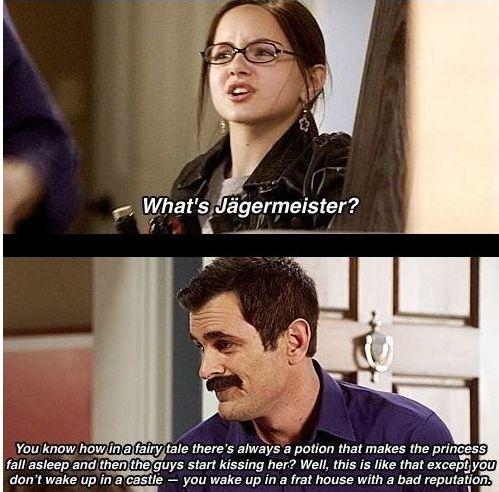
Did you read it? Did you laugh? This meme is all over my Facebook feed again this week, though it's 2 years old. Over half a million people have liked the version on Takei's page, tens of thousands sharing, and there are over 10,000 comments. The ones I saw were all positive, though I read a random sample.

My first response to this was that it was a joke about rape. The girl drinks Jagermeister, falls asleep, and then the guys start kissing her. In the morning, she wakes up in the frat house, doesn't know what happened, and then they slut shame her. But you could read it as occupying just the other side of the line - She goes to the frat house, makes a poor choice of sexual partners, regrets it in the morning, and they slut shame her.

As readers of this blog know, I think a lot about the messages we send to girls throughout their lives, though with a four-year-old daughter we're not to sexuality yet. We've just begun working on a few safety pieces about control of her body (which is hard, as now when she tells me not to tickle her, I have to stop tickling her) and that private parts are private. Right now, she thinks her butt is the funniest thing in the world, and she'd like to show it to you. These are first steps of a long complicated component of parenting.

In many ways, this silly meme encapsulates one of our major problems in the way our society, generally, talks to girls about sex. Shame, reputation, purity, alcohol, bad choices, negativity.

But fortunately, there's Scarleteen. Scarleteen provides "Inclusive, Comprehensive, and Smart Sexuality Information and Help for Teens and 20s." They get millions of hits a year, mostly from people who actually might need their help, advice, or suggestions. If you can think of a topic, from consent to bodies to mental health to how-tos (safely), to birth control and "barriers" and on and on, they have an easily findable piece. Moreover, they respond quickly to people who come to their blog or send them messages with questions. It's just an outstanding resource, and as I face the prospect of thinking about sexuality and my children, I'm glad Scarleteen is out there.

Not long ago, a friend's daughter approached other friends, looking for advice that he/she wasn't getting at home. Scarleteen (and their book) was the answer, or at least the way to begin a conversation long overdue.

Unfortunately, right now Scarleteen needs help. I've given them a donation. If you can, please do so as well. This resource needs to be nurtured by all of us who might know someone needing advice, yet too frightened or ashamed to ask the people in his or her life. Confidential, accurate, information is so important to making good choices about sexual activity. Please donate if you can.

Monday, March 10, 2014

White Male Classroom Privilege

This is an essay about code-switching as a college skill. It starts, though, with questions about privilege and clothing.

In a few minutes I am heading off to teach a class on Crusade and Jihad in the Middle Ages. We've just reached 1200 and I'll be asking the students to break into groups and tell them to design the perfect crusade, thinking about logistics, theology, politics, military strategy, and so forth.

I'll be wearing jeans and a comfortable grey shirt. I used to always wear "business casual" clothing - a button down shirt, nice slacks, comfortable shoes, often a sport coat (tweed yes, elbow patches no), and I did it on purpose. I wanted to put on my "professor" costume, to help students understand that in the classroom there was a kind of formality, to code-switch and model code-switching for them. Moreover, it just felt right.

But this year I am older and more tired, perhaps thanks to my wife's work travel schedule and the stress of finishing a book (on a 3:3 load, while chairing a major committee, and the demands of parenthood). I acquired most of my formal wardrobe while I was on the job market 7 years ago, and I've put on a bit of weight since then. Some of my formal shirts are fraying and I don't want to spend money on them. This year, it's mostly been jeans and comfortable shirts.

In Inside Higher Education over the last week, two competing essays have weighed in on formality in the classroom, focusing on dress, among other subjects. First came Katrina Gulliver. She writes:
I am not your friend; I am not “Miss.”
Is it just me, or are we witnessing an epidemic of familiarity among undergraduates?
They’re all calling me by my first name. Is this happening in your classroom too?
She continues:
To add to the confusion, in most departments there is the species of (white) male professor, who wants to be seen as “cool” (you know the one, who shows up dressed like he’s come to mow the lawn), who invites all the youngsters to “call me Dave,” resting safely in the comfort of assumed male authority. If you’re one of these guys: you are not helping the rest of us.
(For those who are going to slam me for being uptight, watch your privilege).
Will Miller retorted:
I am not your friend, but I do want students to feel comfortable approaching me. And I am not “Mr.” That would be my father.
Last week in this same space, Katrina Gulliver, made an argument regarding “an epidemic of familiarity among undergraduates” that directly implicated white male faculty for “resting safely in the comfort of assumed male authority.” I have witnessed this alleged epidemic in my very own classroom; and I have — much to the chagrin of Gulliver — done nothing to prevent it. Some, in fact, may even accuse me of silently fostering it.
Who I am is a white, male, millennial faculty member and college administrator who prefers creating a respectful environment in which my students are afforded the greatest opportunity for success without worrying about the same interaction in other classrooms. I have been known to occasionally teach in clothes that I could mow the lawn in and apparently a student or two have at some point said I was cool. . . . I strongly believe there is no need to rest on my apparent genetic laurels. I may be a white male, but this has nothing to do with why I am comfortable in a classroom. And more importantly, I think it has little to do with why students can respect me despite knowing my first name and using it if they feel so inclined. 
So let's deal with a few points first.

  1. Female professors have vastly more pressure placed on their physical appearance than male professors. In graduate school, I was shocked to discover that my female fellow TAs received comments - comments on their formal evaluation documents - on their clothing, makeup, hair, and general appearance. That has never happened to me. Moreover, I have heard men who receive the famed "chili pepper" on Rate My Professors (a site dying out with my students) crowing about it, because their students think they are hot. Women ... not so much. This puts financial pressure on women, but also emotional pressure to put on their armor before standing before the classroom. Which leads me to my next point.
  2. Men, especially but not exclusively white men, can tap in to deep wells of assumed authority if they want to. Women have their own wells, but they tend to be linked to mothers and elementary school teachers, rather than power in the adult world. This is what privilege looks like. I tap into it all the time. It's a shortcut for me - and you know, I sometimes need that shortcut. It's not fair. I'm not sure how NOT to tap into it. Putting on a suit and tie would only enhance it.
  3. I think Gulliver's assumption of motive - "wants to be cool" - is as unsupported as Miller's more preposterous statement that being a white male has "nothing to do" with why he is comfortable. OF COURSE it is part of why he is comfortable, although surely not only that. And of course some people want to be cool. I don't want my students to think I'm cool. I just like to get up, put on jeans, deal with my kids' breakfasts, get them to school, put on a coat, and go - not stop and re-dress myself in something more formal (or dress formally first, and have my kids spill on me). I do want my students to think I am smart, organized, engaged, interested, interesting, demanding, and so forth. My white maleness helps a lot with that.
Mostly, though, my white maleness affords me the room to make this choice. I can de-authorize myself anytime I want. I sit on tables. I tell self-effacing jokes (and the students actually laugh at one in three of them, a pretty good ratio). I didn't mind it when students started showing up at my band gigs because it wasn't going to be a threat to my classroom authority. Heck, it might even make me cool.

I've got all the advantages: white, straight, male, middle class academic parents, etc. You name a source of privilege, I've got pretty much got it.  It's a privilege that enables me to move easily in and out of formal modes. The question is what it means for me to take advantage of that privilege.

To me, answering that question requires thinking about my specific students. Many of them, first-generation students and first-generation Americans have trouble with formality. I don't especially care if my students are formal to me (there's that privilege), but I do think knowing how and when to be formal is a key life skill. On the academic side, formal writing is more precise writing, and I labor to guide my students beyond simple emotional reaction to texts. Formal reading is closer reading, rather than tl;dr skimming. I want them to write to me and address me as Professor Perry (I've surrendered Doctor, despite the Latin roots), so they understand that I - and that college - is not like highschool. They need to be able to follow directions.

That said, my students also need to know that professors are people you can ask for help, feel safe in expressing doubts and fears, pushing for comprehensible answers to questions, and generally engage with. We can't be distant intimidating towers of knowledge, whether we wear a tie or not, especially as white male authority figures. Are my first gen non-white students going to be more able to engage with me if I erect barriers between them and me based on speech and dress? Is that going to help them learn?

And so I code-switch. I try to model code-switching. I try to teach it as a skill, right along with textual analysis and thesis-driven essay writing. I do it explicitly. I talk about it. I take authority and I give it back, I point out I'm doing it, I ask to think about what it means.

And that, to me, is the ultimate lesson. Be intentional in your decisions about formality or lack thereof. Don't let the default win.


Sunday, March 9, 2014

Gender, Science, and the Discovery of Trisomy-21 (Down syndrome)

Go to http://xkcd.com/896/ for the full comic. It's good.
It's not exactly news that women have often been denied credit for their contributions to major scientific discoveries or inventions. Rosalind Franklin, one of the discoverers of DNA, is justifiably the most famous, and her case still infuriates. Gender bias in the classroom still raises barriers for women who want to become scientists. 

So in honor of woman's history month and one day late for the socialist holiday of International (Working) Woman's Day, I'd like to tell you a story that I've only just learned.

Dr. Marthe Gautier, people seem to agree, was the first to discover the precise genetic basis for Down syndrome. Which is to say she did all the work with very little funding, developed precise samples that demonstrated that people with the syndrome had 47 rather than 46 chromosomes, and lacked the equipment to determine which chromosome it was. Another scientist, Jerome LeJeune, offered to take the samples to another lab with better equipment. Not long after, he became the famous discoverer of Trisomy-21.

You can read a summary of events here in English or this longer piece in French. There's also a .pdf of an essay that Gautier co-wrote on the occasion of the 50th anniversary of the discovery of Trisomy-21, from the journal Human Genetics. From these texts, a few key points emerge:

First - Gautier was practicing what Kuhn would call normal science, building on a new paradigm (DNA) to do the vital work of solving a long-existing process. Second - she was enormously resourceful, using cheap equipment, taking out a loan, raising a rooster for blood cultures and using her own blood for human serum. She made the big breakthroughs here on a shoe-string budget. 

RE : And you also had another regular visitor who seemed intently interested in your project?
MG : Yes, Dr. Jérôme Lejeune. He was in charge of the outpatient clinic for Down syndrome patients at the hospital. He was a researcher, first grade, working under the National Center for Scientific Research (CNRS), the largest governmental research organization in France.
We were about the same age, in our early 30s. I had not known him previously.
Later, I learned that he was a protégé of Prof. Turpin and that the two men, both pediatricians like myself, had collaborated on joint research projects and publications on dermatoglyphics and ionizing radiation studies in connection with suspected genetic disorders.
RE : Did Dr. Lejeune have any skills or training in cell culturing?
MG : None whatsoever. As I noted earlier, Dr. Lejeune's main interest was statistical data in connection with fingerprint patterns [dermatoglyphics] of children with Down syndrome. He had never taken an interest in pathologic studies or in cell cultures.
I counted 47 chromosomes on the first mitoses I obtained from the Down syndrome sample thus revealing the first autosomal chromosome aberration recognized in the cells of the human species – trisomy 21.
After getting the slides showing an extra chromosome:
MG: I didn't have a photo light microscope to identify the 47° small fragment.
RE : Was that when Dr. Lejeune offered to help?
MG: Yes, without a light microscope I could not take photographs of my discovery. Dr. Lejeune volunteered to take my slides to another laboratory and get them photographed. Naïvely, I consented.

RE: Did he ever return the slides with the promised photos to you?
MG: No, never. I never saw them. When I finally asked him where the slides were he told me they were being kept under lock and key by Prof. Turpin.
RE: Tell me about the meeting of the International Human Genetics Conference in Montreal, Canada held in August 1958?
MG: Dr. Lejeune was there as an expert on ionizing radiation representing the CNRS. But he also had in his possession a large amount of data relating to my investigation which he had taken without my knowledge.
Lejeune requested that an informal seminar of geneticists be organized at the Department of Genetics at McGill University at which time he proceeded to announce the discovery of the presence of an additional piece of chromatin in patients with Down syndrome.
RE: Did he mention your name in connection with the discovery?
MG: No. He presented the findings as if they were his own. Henceforth, the discovery would always be associated with his name.
The interview goes on to note the many awards and career advancements promptly showered on LeJeune, his gradual emergence as a right-wing polemicist against pre-natal testing, and his alliance with anti-abortion forces. His reward for all this - an ever-advancing case for beatification in the Catholic Church. Fortunately, Gautier concludes, histories of the study of the syndrome are beginning to revisit the evidence and are giving Gautier the credit she seems to deserve.

I'm not an expert in the science. Perhaps there are elements to the story that I am missing. But it fits with a larger pattern of the ways in which women have had trouble entering the scientific profession, been relegated to subordinate positions within labs or programs, and been denied credit for their work.

No one seems to argue that Gautier, with considerable diligence and ingenuity, developed the samples from which LeJeune made his identification of the chromosomal nature of the cause of Down syndrome.

Moreover, Gautier herself offers some thoughts on the subject, and these seem like a good way to conclude:

MG: Well, since this was the only way to reach the higher levels and open the door to a professorship or department head, I had to persevere. The written examination test papers were labeled only with an identification number, with no name, to ensure anonymity and to prevent favoritism or sex discrimination. However, this was impossible to avoid in the oral examination. Anyway, I succeeded at my fourth attempt. I was 25 and it was in 1950. That year, only two women became interns in Parisian hospitals, versus eighty men. This provided me with four years of experience in eight different pediatric departments. That meant eight different bosses working in different specialties and with very different teaching practices. It was a wonderful experience.

RE: I understand that before Paulette's untimely death when German troops were retreating from Paris in 1944, at the war's end, she gave you some excellent advice on being a woman in a male profession.

MG : You have to remember that when I arrived in Paris, during the war, from the country, I was only 17. I was completely naïve, my entire education having taken place in a Catholic girls school. In any case, Paulette was very adamant about two things. Firstly, she said that girls have to work twice as hard as boys, because we need to be especially brilliant in oral examinations, when we are the most vulnerable because our sex is evident. Secondly, nepotism was as rife in medicine, as it was elsewhere. Our father was a farmer and we had no relatives in the medical profession. So we had no highly placed contacts among the heads of departments who could help us.

We knew we were not the "bosses' daughters," but felt this was no reason not to try and reach the top of our profession. We knew it was a gamble. But of course, we did not reckon with my sister's untimely and tragic death.

This is my own personal story which I am telling you today, but I think it bears witness to the veracity of my sister's convictions concerning the role of women in medicine in the mid-20th century.
I am grateful to Gautier for her work in identifying the nature of Down syndrome. Yes, it's led to a lot of complexity in terms of pre-natal testing and issues relating to abortion, issues I intend to address further in the coming month, but there are even bigger consequences of her work. Much as autism was once linked to frigid mothers (no, really); Down syndrome was linked to maternal syphillis (pdf).

Even today, the first reaction to diagnoses of Down syndrome is usually for the mother to blame herself (which is why genetic counselors are taught to stress the random genetic nature of the syndrome right away).

Thanks to Gautier, we know what Down syndrome is, and thanks to her, we can keep working on what it does, and does not, mean.