Wednesday, March 12, 2014

Down syndrome, sexuality, and agency

I have a lot to say about the Georgia rape case. I've read trial documents, some of which I intend to post this week, and can answer some questions that people have had. I'll do that in another post, because here I want to focus on the least clear part of my essay.

I wrote:
And here is where disability comes back into play. Because of her Down syndrome, Jane is relatively immune to the kinds of victim-blaming endured by other women who are assaulted or abused. 
We know she wasn't asking for it. We can't blame her for staying in the house while Dumas got drunk. We know she didn't encourage him, then change her mind the next day. All of the myths about false reporting of rape don't apply to Jane because of her disability, and for that at least we can be thankful. Jane's experience points to the offensive way women's behaviors are interrogated when they seek justice.
Some people in the disability community have queried this paragraph. They've pointed out, correctly, that adults with Down syndrome should have fully developed sex drives and should be expected to act on those sex drives - hence the vital importance of sexual education for people with developmental disabilities.

Let's see if I can get this right.

I agree with and do a lot of thinking and writing about agency and disability. But here I was talking about perceptions of our broader culture. When a typical woman accuses someone of rape, there will ALWAYS be a segment of society that wonders if she was asking for it, that asks what she was wearing, that queries her decision-making involving alcohol and company, and so forth. Victim-blaming is ground into our culture - and my essay shows some of the ways in which it emerges in our justice system.

With Down syndrome, though, Jane is relatively  immune from those kinds of victim-blaming perceptions. This says a lot about the way we, in fact, deny agency to people with disability, to make them passive objects. But just for today, just for this case, I want to use those perceptions to highlight the broader injustice. Our society is programmed to see women like Jane as victims, and yet she too received the "didn't act right" treatment from the judge.

Thinking about disability and agency brings my response to this case to a level of complexity I decided to leave out of my CNN essay. A short op-ed (at 1200 words this is actually a little long) allows you to do few things: Describe a situation, make one argument, support the argument with a few additional data points. This perception protects Jane in the public eye (hence the outrage) and so serves to start us (or at least some readers) thinking about rape culture and its consequences. But I think I could have intensified the point that the response to Jane is the response that other women get, we're just outraged in the case of Jane ... AND ... the related point that Jane is, first and foremost, a woman, not a "down syndrome woman" or a "woman who suffers from Down syndrome" (both of which I have seen).

And from what I can tell of Jane, she has seized the agency in this case, telling what happened to her, testifying in court, answering all the hard questions, and is ready to do it again. She knows what happened is wrong. She convinced a jury. And if the motion to overrule the Judge's motion to overrule the jury is successful (i.e. the original verdict reinstated), then that will be the end. But if not, Jane is ready to retake the stand.

So. What do you think?

Tuesday, March 11, 2014

CNN Opinion: Intersection between Rape Culture and Down Syndrome

I have a new essay up on CNN about a case in Georgia in which a woman with Down syndrome was allegedly raped, a jury convicted the rapist, and the judge overturned the conviction.

The essay focuses on rape culture over disability, but in the next few days I'll talk more about the disability aspect, my interview with the DA in the case, and some other related thoughts based on reading court documents. In the meantime, please read the CNN piece.

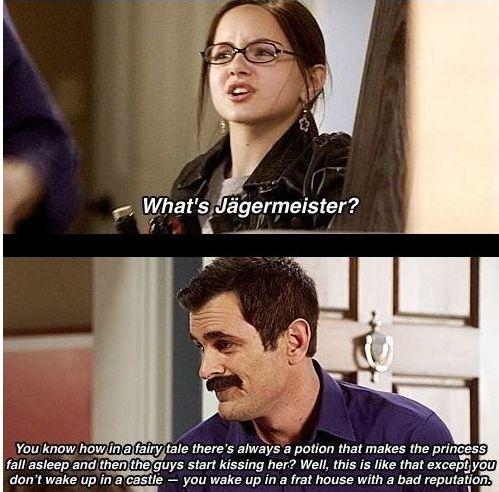
Talking to Girls about Sex - With a surprise ending


Did you read it? Did you laugh? This meme is all over my Facebook feed again this week, though it's 2 years old. Over half a million people have liked the version on Takei's page, tens of thousands sharing, and there are over 10,000 comments. The ones I saw were all positive, though I read a random sample.

My first response to this was that it was a joke about rape. The girl drinks Jagermeister, falls asleep, and then the guys start kissing her. In the morning, she wakes up in the frat house, doesn't know what happened, and then they slut shame her. But you could read it as occupying just the other side of the line - She goes to the frat house, makes a poor choice of sexual partners, regrets it in the morning, and they slut shame her.

As readers of this blog know, I think a lot about the messages we send to girls throughout their lives, though with a four-year-old daughter we're not to sexuality yet. We've just begun working on a few safety pieces about control of her body (which is hard, as now when she tells me not to tickle her, I have to stop tickling her) and that private parts are private. Right now, she thinks her butt is the funniest thing in the world, and she'd like to show it to you. These are first steps of a long complicated component of parenting.

In many ways, this silly meme encapsulates one of our major problems in the way our society, generally, talks to girls about sex. Shame, reputation, purity, alcohol, bad choices, negativity.

But fortunately, there's Scarleteen. Scarleteen provides "Inclusive, Comprehensive, and Smart Sexuality Information and Help for Teens and 20s." They get millions of hits a year, mostly from people who actually might need their help, advice, or suggestions. If you can think of a topic, from consent to bodies to mental health to how-tos (safely), to birth control and "barriers" and on and on, they have an easily findable piece. Moreover, they respond quickly to people who come to their blog or send them messages with questions. It's just an outstanding resource, and as I face the prospect of thinking about sexuality and my children, I'm glad Scarleteen is out there.

Not long ago, a friend's daughter approached other friends, looking for advice that he/she wasn't getting at home. Scarleteen (and their book) was the answer, or at least the way to begin a conversation long overdue.

Unfortunately, right now Scarleteen needs help. I've given them a donation. If you can, please do so as well. This resource needs to be nurtured by all of us who might know someone needing advice, yet too frightened or ashamed to ask the people in his or her life. Confidential, accurate, information is so important to making good choices about sexual activity. Please donate if you can.

Monday, March 10, 2014

White Male Classroom Privilege

This is an essay about code-switching as a college skill. It starts, though, with questions about privilege and clothing.

In a few minutes I am heading off to teach a class on Crusade and Jihad in the Middle Ages. We've just reached 1200 and I'll be asking the students to break into groups and tell them to design the perfect crusade, thinking about logistics, theology, politics, military strategy, and so forth.

I'll be wearing jeans and a comfortable grey shirt. I used to always wear "business casual" clothing - a button down shirt, nice slacks, comfortable shoes, often a sport coat (tweed yes, elbow patches no), and I did it on purpose. I wanted to put on my "professor" costume, to help students understand that in the classroom there was a kind of formality, to code-switch and model code-switching for them. Moreover, it just felt right.

But this year I am older and more tired, perhaps thanks to my wife's work travel schedule and the stress of finishing a book (on a 3:3 load, while chairing a major committee, and the demands of parenthood). I acquired most of my formal wardrobe while I was on the job market 7 years ago, and I've put on a bit of weight since then. Some of my formal shirts are fraying and I don't want to spend money on them. This year, it's mostly been jeans and comfortable shirts.

In Inside Higher Education over the last week, two competing essays have weighed in on formality in the classroom, focusing on dress, among other subjects. First came Katrina Gulliver. She writes:
I am not your friend; I am not “Miss.”
Is it just me, or are we witnessing an epidemic of familiarity among undergraduates?
They’re all calling me by my first name. Is this happening in your classroom too?
She continues:
To add to the confusion, in most departments there is the species of (white) male professor, who wants to be seen as “cool” (you know the one, who shows up dressed like he’s come to mow the lawn), who invites all the youngsters to “call me Dave,” resting safely in the comfort of assumed male authority. If you’re one of these guys: you are not helping the rest of us.
(For those who are going to slam me for being uptight, watch your privilege).
Will Miller retorted:
I am not your friend, but I do want students to feel comfortable approaching me. And I am not “Mr.” That would be my father.
Last week in this same space, Katrina Gulliver, made an argument regarding “an epidemic of familiarity among undergraduates” that directly implicated white male faculty for “resting safely in the comfort of assumed male authority.” I have witnessed this alleged epidemic in my very own classroom; and I have — much to the chagrin of Gulliver — done nothing to prevent it. Some, in fact, may even accuse me of silently fostering it.
Who I am is a white, male, millennial faculty member and college administrator who prefers creating a respectful environment in which my students are afforded the greatest opportunity for success without worrying about the same interaction in other classrooms. I have been known to occasionally teach in clothes that I could mow the lawn in and apparently a student or two have at some point said I was cool. . . . I strongly believe there is no need to rest on my apparent genetic laurels. I may be a white male, but this has nothing to do with why I am comfortable in a classroom. And more importantly, I think it has little to do with why students can respect me despite knowing my first name and using it if they feel so inclined. 
So let's deal with a few points first.

  1. Female professors have vastly more pressure placed on their physical appearance than male professors. In graduate school, I was shocked to discover that my female fellow TAs received comments - comments on their formal evaluation documents - on their clothing, makeup, hair, and general appearance. That has never happened to me. Moreover, I have heard men who receive the famed "chili pepper" on Rate My Professors (a site dying out with my students) crowing about it, because their students think they are hot. Women ... not so much. This puts financial pressure on women, but also emotional pressure to put on their armor before standing before the classroom. Which leads me to my next point.
  2. Men, especially but not exclusively white men, can tap in to deep wells of assumed authority if they want to. Women have their own wells, but they tend to be linked to mothers and elementary school teachers, rather than power in the adult world. This is what privilege looks like. I tap into it all the time. It's a shortcut for me - and you know, I sometimes need that shortcut. It's not fair. I'm not sure how NOT to tap into it. Putting on a suit and tie would only enhance it.
  3. I think Gulliver's assumption of motive - "wants to be cool" - is as unsupported as Miller's more preposterous statement that being a white male has "nothing to do" with why he is comfortable. OF COURSE it is part of why he is comfortable, although surely not only that. And of course some people want to be cool. I don't want my students to think I'm cool. I just like to get up, put on jeans, deal with my kids' breakfasts, get them to school, put on a coat, and go - not stop and re-dress myself in something more formal (or dress formally first, and have my kids spill on me). I do want my students to think I am smart, organized, engaged, interested, interesting, demanding, and so forth. My white maleness helps a lot with that.
Mostly, though, my white maleness affords me the room to make this choice. I can de-authorize myself anytime I want. I sit on tables. I tell self-effacing jokes (and the students actually laugh at one in three of them, a pretty good ratio). I didn't mind it when students started showing up at my band gigs because it wasn't going to be a threat to my classroom authority. Heck, it might even make me cool.

I've got all the advantages: white, straight, male, middle class academic parents, etc. You name a source of privilege, I've got pretty much got it.  It's a privilege that enables me to move easily in and out of formal modes. The question is what it means for me to take advantage of that privilege.

To me, answering that question requires thinking about my specific students. Many of them, first-generation students and first-generation Americans have trouble with formality. I don't especially care if my students are formal to me (there's that privilege), but I do think knowing how and when to be formal is a key life skill. On the academic side, formal writing is more precise writing, and I labor to guide my students beyond simple emotional reaction to texts. Formal reading is closer reading, rather than tl;dr skimming. I want them to write to me and address me as Professor Perry (I've surrendered Doctor, despite the Latin roots), so they understand that I - and that college - is not like highschool. They need to be able to follow directions.

That said, my students also need to know that professors are people you can ask for help, feel safe in expressing doubts and fears, pushing for comprehensible answers to questions, and generally engage with. We can't be distant intimidating towers of knowledge, whether we wear a tie or not, especially as white male authority figures. Are my first gen non-white students going to be more able to engage with me if I erect barriers between them and me based on speech and dress? Is that going to help them learn?

And so I code-switch. I try to model code-switching. I try to teach it as a skill, right along with textual analysis and thesis-driven essay writing. I do it explicitly. I talk about it. I take authority and I give it back, I point out I'm doing it, I ask to think about what it means.

And that, to me, is the ultimate lesson. Be intentional in your decisions about formality or lack thereof. Don't let the default win.


Sunday, March 9, 2014

Gender, Science, and the Discovery of Trisomy-21 (Down syndrome)

Go to http://xkcd.com/896/ for the full comic. It's good.
It's not exactly news that women have often been denied credit for their contributions to major scientific discoveries or inventions. Rosalind Franklin, one of the discoverers of DNA, is justifiably the most famous, and her case still infuriates. Gender bias in the classroom still raises barriers for women who want to become scientists. 

So in honor of woman's history month and one day late for the socialist holiday of International (Working) Woman's Day, I'd like to tell you a story that I've only just learned.

Dr. Marthe Gautier, people seem to agree, was the first to discover the precise genetic basis for Down syndrome. Which is to say she did all the work with very little funding, developed precise samples that demonstrated that people with the syndrome had 47 rather than 46 chromosomes, and lacked the equipment to determine which chromosome it was. Another scientist, Jerome LeJeune, offered to take the samples to another lab with better equipment. Not long after, he became the famous discoverer of Trisomy-21.

You can read a summary of events here in English or this longer piece in French. There's also a .pdf of an essay that Gautier co-wrote on the occasion of the 50th anniversary of the discovery of Trisomy-21, from the journal Human Genetics. From these texts, a few key points emerge:

First - Gautier was practicing what Kuhn would call normal science, building on a new paradigm (DNA) to do the vital work of solving a long-existing process. Second - she was enormously resourceful, using cheap equipment, taking out a loan, raising a rooster for blood cultures and using her own blood for human serum. She made the big breakthroughs here on a shoe-string budget. 

RE : And you also had another regular visitor who seemed intently interested in your project?
MG : Yes, Dr. Jérôme Lejeune. He was in charge of the outpatient clinic for Down syndrome patients at the hospital. He was a researcher, first grade, working under the National Center for Scientific Research (CNRS), the largest governmental research organization in France.
We were about the same age, in our early 30s. I had not known him previously.
Later, I learned that he was a protégé of Prof. Turpin and that the two men, both pediatricians like myself, had collaborated on joint research projects and publications on dermatoglyphics and ionizing radiation studies in connection with suspected genetic disorders.
RE : Did Dr. Lejeune have any skills or training in cell culturing?
MG : None whatsoever. As I noted earlier, Dr. Lejeune's main interest was statistical data in connection with fingerprint patterns [dermatoglyphics] of children with Down syndrome. He had never taken an interest in pathologic studies or in cell cultures.
I counted 47 chromosomes on the first mitoses I obtained from the Down syndrome sample thus revealing the first autosomal chromosome aberration recognized in the cells of the human species – trisomy 21.
After getting the slides showing an extra chromosome:
MG: I didn't have a photo light microscope to identify the 47° small fragment.
RE : Was that when Dr. Lejeune offered to help?
MG: Yes, without a light microscope I could not take photographs of my discovery. Dr. Lejeune volunteered to take my slides to another laboratory and get them photographed. Naïvely, I consented.

RE: Did he ever return the slides with the promised photos to you?
MG: No, never. I never saw them. When I finally asked him where the slides were he told me they were being kept under lock and key by Prof. Turpin.
RE: Tell me about the meeting of the International Human Genetics Conference in Montreal, Canada held in August 1958?
MG: Dr. Lejeune was there as an expert on ionizing radiation representing the CNRS. But he also had in his possession a large amount of data relating to my investigation which he had taken without my knowledge.
Lejeune requested that an informal seminar of geneticists be organized at the Department of Genetics at McGill University at which time he proceeded to announce the discovery of the presence of an additional piece of chromatin in patients with Down syndrome.
RE: Did he mention your name in connection with the discovery?
MG: No. He presented the findings as if they were his own. Henceforth, the discovery would always be associated with his name.
The interview goes on to note the many awards and career advancements promptly showered on LeJeune, his gradual emergence as a right-wing polemicist against pre-natal testing, and his alliance with anti-abortion forces. His reward for all this - an ever-advancing case for beatification in the Catholic Church. Fortunately, Gautier concludes, histories of the study of the syndrome are beginning to revisit the evidence and are giving Gautier the credit she seems to deserve.

I'm not an expert in the science. Perhaps there are elements to the story that I am missing. But it fits with a larger pattern of the ways in which women have had trouble entering the scientific profession, been relegated to subordinate positions within labs or programs, and been denied credit for their work.

No one seems to argue that Gautier, with considerable diligence and ingenuity, developed the samples from which LeJeune made his identification of the chromosomal nature of the cause of Down syndrome.

Moreover, Gautier herself offers some thoughts on the subject, and these seem like a good way to conclude:

MG: Well, since this was the only way to reach the higher levels and open the door to a professorship or department head, I had to persevere. The written examination test papers were labeled only with an identification number, with no name, to ensure anonymity and to prevent favoritism or sex discrimination. However, this was impossible to avoid in the oral examination. Anyway, I succeeded at my fourth attempt. I was 25 and it was in 1950. That year, only two women became interns in Parisian hospitals, versus eighty men. This provided me with four years of experience in eight different pediatric departments. That meant eight different bosses working in different specialties and with very different teaching practices. It was a wonderful experience.

RE: I understand that before Paulette's untimely death when German troops were retreating from Paris in 1944, at the war's end, she gave you some excellent advice on being a woman in a male profession.

MG : You have to remember that when I arrived in Paris, during the war, from the country, I was only 17. I was completely naïve, my entire education having taken place in a Catholic girls school. In any case, Paulette was very adamant about two things. Firstly, she said that girls have to work twice as hard as boys, because we need to be especially brilliant in oral examinations, when we are the most vulnerable because our sex is evident. Secondly, nepotism was as rife in medicine, as it was elsewhere. Our father was a farmer and we had no relatives in the medical profession. So we had no highly placed contacts among the heads of departments who could help us.

We knew we were not the "bosses' daughters," but felt this was no reason not to try and reach the top of our profession. We knew it was a gamble. But of course, we did not reckon with my sister's untimely and tragic death.

This is my own personal story which I am telling you today, but I think it bears witness to the veracity of my sister's convictions concerning the role of women in medicine in the mid-20th century.
I am grateful to Gautier for her work in identifying the nature of Down syndrome. Yes, it's led to a lot of complexity in terms of pre-natal testing and issues relating to abortion, issues I intend to address further in the coming month, but there are even bigger consequences of her work. Much as autism was once linked to frigid mothers (no, really); Down syndrome was linked to maternal syphillis (pdf).

Even today, the first reaction to diagnoses of Down syndrome is usually for the mother to blame herself (which is why genetic counselors are taught to stress the random genetic nature of the syndrome right away).

Thanks to Gautier, we know what Down syndrome is, and thanks to her, we can keep working on what it does, and does not, mean.

Saturday, March 8, 2014

Who you gonna believe, me or your lying eyes?

I've taken off the Hugo nominee pin that I've worn proudly on my lapel since my Doctor Who episode, The Doctor's Wife, won the Hugo in September 2012, and, for now, I've put it away.
It isn't Neil Gaiman's fault that people worship him. Heck, before deconstructing his reaction post, which I find highly manipulative, let me say that I love his work. American Gods, Anansi Boys, Stardust, and The Graveyard Book, just to name recent pieces, each stunned me in their own ways as I read and re-read them. I intend to read more of his work in the future, because he is an extraordinary storyteller, and I count myself as lucky to be able to read his tales. That said, my interest in power and discourse, especially online, had led me into his blog writing on Ross and the Hugos, and I have a few thoughts. Bear with me.

I've always been a little uncomfortable with the way fan-groups worship their creative heroes because of the bleed. Our love of their work bleeds over into the love of the creator himself or herself, and then the words of the creator start to carry a kind of unimpeachable weight. When it reaches the level of Gaiman, or, say, Joss Whedon and the like, it must be very hard to maintain any kind of perspective.

Which brings me to Neil Gaiman's reaction to l'affaire Hugo (it's so much more interesting in French). To refresh: Loncon's chairs asked Neil to ask his friend Jonathan Ross to host the Hugos. Ross said yes. There was a twitter backlash. Ross stepped down. Then there was a backlash to the backlash. And here we are.

Gaiman took it personally. Who wouldn't? Not only was Ross doing this as a favor to his friend, but Gaiman feels he knows better. Ross is, in private, he tells us, a great guy, a close friend, and to have large chunks of his world - fandom - reject a friend is hurtful.

But Gaiman's own words and experiences suggest that Ross is, in fact, someone who decides which boundaries he is going to respect and which he'll disregard, because he thinks he knows best - either because the person will eventually like it, or because the "scene" requires it.  One of Gaiman's defenses of Ross as a good guy came from his documentary "Search for Steve Ditko," about trying to find a legendary hero of the Comics world.

Together, Gaiman and Ross travel to Ditko's office building, get his phone number, and Ross calls him. Ditko says he doesn't want to see him (that's a pretty firm boundary). Ross and Gaiman go up anyway without their camera crew, then come back down to report that they had coffee and that Ditko was very nice. However, they also report that Ditko now wishes he didn't have his name on the office door. This is a man who wants to be left alone. Here's the telling exchange, just after the phone call.
JR: He essentially told me to fuck off. HAHAHAHAHAHAH. but in the most polite and firm manner I have ever encountered.
JR: Ok, shall we go and knock on his door.
NG: You want to?
JR: Yeah, Not with the crew, but let's go up there to see, but let's do it.
NG: Ok
JR: Ok
JR: Me and Neil are going to upset him, but we've got to do it, haven't we Neil
NG: I am Robin to his Batman.
Does that look to you like Jonathan Ross is a man who respects boundaries, even clearly expressed ones? "Me and Neil are going to upset him." Neil goes along with it.

There's more. One of the pieces reacting to the l'affaire Hugo came from the New Statesman. It defended Ross, accused people of bullying him (and sparked my first post), and generally, as Radish Reviews noted, punched down. It was also, as Radish Reviews uncovered, written by Neil Gaiman's goddaughter, though she never disclosed her connection (this, I feel, is an unforgiveable lapse for the editors and the author. Opinion pieces are fine. I write a lot of them. Connections must be disclosed, which is why in my last post I noted I play music with Seanan's girlfriend). At any rate, Gaiman's goddaughter was able to get an interesting quote.
“What was peculiar about the attacks was they had constructed an ad hominem straw man to attack, who was sexist, sizeist, hates women and likes making everyone feel bad,” said Gaiman. “It doesn’t bear any resemblance to Jonathan. While he has occasionally said things that make you go ‘Oh god, your mouth opened and that thing came out’, he is a consummate professional.”
This paragraph contains inherent contradictions, contradictions that Gaiman delves into in his blog post.
The weirdest bit was, I understood some of the worry; I'd had it myself, 25 years ago, when Jonathan and I had first met, and he asked me and Dave McKean to be on his chat show to talk about VIOLENT CASES. I said "No, you make fun of people. This is comics. It matters to me. I don't want you making fun of it."
That's not the weird bit, that's the bit that's supposed to help you understand that people were genuinely worried, not staging it to get attention, not doing it as sour grapes, not following some agenda - genuinely worried, just like Neil was. What they didn't have was Gaiman's access and power. Ross invited Gaiman to watch him film another interview, showing him as that professional. But when Ross was confronted by angry tweets, he reacted by calling a random fan (we're not even at Stross or Nielsen Hayden or McGuire level) stupid.

Ross was under no obligation to be kind and reassuring in the face of the twitter storm. But he had the power to do so and he made a different choice. And I don't really blame him, because as Gaiman says:
Twitterstorms are no fun when people are making up things about you or insulting you for things you didn't do or think or say. When scores of people from a group that you consider yourself a part of are shouting at you, it's incredibly upsetting, no matter who you are. And these things spill over and get bigger -- I was saddened to learn that Jane Goldman, Jonathan's wife, one of the gentlest, kindest people I know (and the person who, with Jonathan, got me onto Twitter, back in December 2009) had deleted her Twitter account because of all this.
Yes, this is a problem with Twitter. On Thursday some random person named UnkleBob, probably English based on his accent, told me to fuck off. Actually, he said, "Fuck off Dave, you gimp." Man, that was hurtful. So I told him that the next ad hominem would result in a block, so it was his choice - we could dialogue or I could just block him. And this is the great thing about Twitter - you can just turn people off. If only that worked with my neighbors (Not really! I have the world's greatest neighbors. Three of them own snow-blowers. I love you neighbors. I was just making a point about the online vs analog world). UnkleBob and I had a pretty decent conversation after that, even if we didn't persuade the other.
I was seriously disappointed in the people, some of whom I know and respect, who stirred other people up to send invective, obscenities and hatred Jonathan's way over Twitter (and the moment you put someone's @name into a tweet, you are sending it directly to that person), much of it the kind of stuff that they seemed to be worried that he might possibly say at the Hugos, unaware of the ironies involved.
Disappointed. That's a nicely-chosen word. It's one that parents use with their kids. I'm not mad at you, I'm disappointed. Do try to do better next time, you don't want to make daddy disappointed.

I guess I'd like to know who he thinks stirred up people. I see people writing their feelings and opinions, expressing their discontent with their choices, liking to the @wossy account. Neil linked to this post, which had a guy (with 120 followers) calling Ross a "noted gratingly fatuous bell end." That's not very nice. Again, to the New Statesman piece and Neil's godddaughter.
A vocal contingent resorted to petty name-calling on the Internet. Does calling someone a “grating fatuous bellend” not count as bullying if your subject is famous? I call bullshit. Does saying horrible things about someone because you think they might possibly say horrible things about you make you the better person? In this tirade about insults and slights, nasty bullies with little self-awareness recast themselves as the victim.
I've already talked about my perception of bullying and power here, though I accept there are other ways to cast the situation. And once again I am appalled that this is someone deeply implicated in the affair writing as if they are an outside observer. At any rate, I can't believe Gaiman is talking about @TalkyMeat and his 120 followers, when he says "people, some of whom I know and respect, who stirred other people."
I sympathise with anyone who felt that Jonathan wasn't going to make an appropriate Hugos host, and with anyone who spoke about it to the convention committee, but do not believe a campaign aimed at vilifying Jonathan personally was wise or kind. And for those who thought that making this happen was a way to avoid SF and the Hugos appearing in the tabloids, I'd point to the Streisand effect, with a shake of the head.
There was no "campaign." There was a Twitterstorm. It upset Goldman, as Neil notes above, but again as covered in the last post, Goldman's specific complaints about Seanan and her daughter are unfounded. Neil knows this too, given his approximately 8 zillion followers to whom he cannot possibly respond. Maybe he thinks Seanan's 12K is like a chat around the dinner table.

But here's the real thing - Neil is saying that the only appropriate way to respond negatively is to speak to the convention committee, to follow procedure, to be polite. That's a fine policy for people with power and access. It's not how groups of people actually effect change, with one-on-one conversations, each one with the powerful person saying, "thanks for your comments." Change happens with groups. Sometimes groups function as mobs, bullies, or twitterstorms. But if you don't have power, you have to organize.

I think the process of organizing online, rather than forming an "angry mob" (see previous post), is still in development. But I see this again and again: A group of people get angry, legitimately or no, express it online, and the other side tries to invert the power dynamics by claiming victimization, legitimately or no. Much as every war is expressed as a defensive one, every online disagreement results in competing claims of victim. Pay attention to the power dynamics, are people punching up or punching down.

So let's sum up. Gaiman believes that Ross is a great guy, a professional, and is the wronged party here.   Gaiman is really disappointed in people who expressed their anger publicly rather than going through channels. He has, sadly, taken off his Hugo pin as a way of making you all feel bad for disappointing him. It's paternalistic and manipulative.

Moreover, the belief that Ross was a wildly inappropriate choice is supported by Gaiman's own experiences as he reports. He has personally witnessed Ross ignoring boundaries in order to upset someone - because he wants to, because it would be funny, because it would make for better TV. Is this someone who would make you, absent Neil's personal experience with Ross, feel safe as a Hugo guest?

So in the end, to quote a friend of mine, Gaiman is asking his fans, his often worshipful fans, "Who are you going to believe, me or your lying eyes?"

I guess I'll go with my lying eyes this time.

Friday, March 7, 2014

Syllabus as Contract


I'm working on an essay about the corporate language in higher ed as a followup to the big response I got to this post on EXCELLENT CUSTOMER SERVICE in a job advertisement for a Renaissance English professor.

One paragraph of my draft currently reads:
Take the syllabus. Many faculty (in my experience) and some teaching or student-resource centers refer to the syllabus as a contract. This makes sense as a tactic to teach students to, first of all, read the syllabus, and second to try and create a sense of reciprocal obligation. In the contract, both sides are obligated to hold to its terms. The syllabus-as-contract can function defensively, protecting faculty from lawsuits or disciplinary action from students upset about their grades. In my experience, students actually treat syllabi more as End User License Agreements (EULAs) – something for which one glances at the first page, clicks “agree to terms,” and moves on to the product without reading any of the document.
I then go on to talk about learning-centered syllabi as better for the professor and the student, and why, and how using the business model of contract gets in the way of learning, and in fact gets in the way of the product we are actually selling: a well-structured opportunity to learn and to earn meaningful (hopefully) credentials.

Below I offer a quick sampling of online texts on the syllabus as contract, each using it as a positive metaphor. There is an equally vast, and perhaps more current, array of texts on the syllabus that explicitly reject that metaphor, but that's a subject for another post. Some of these links are aimed at faculty, some graduate student teachers, and some at undergrads.

I'll offer just a few comments at the end and please note, these are pulled out of context intentionally. No criticism of the specific posts is intended. I'm just interested in how the language is being used. Follow the links for the full context.
  • On the Cutting Edge - Professional Development for GeoScience FacultyA detailed syllabus gives students a sense of the nature of the course, what they will be expected to do in the course, and how their performance will be assessed. In many cases, the syllabus is viewed as a contract between you and the students. Whether considered a legal contract or not, a syllabus should be clear about policies and procedures related to the course. Some institutions have specific requirements regarding what should be included on the syllabus.
  • The Purpose of a Syllabus (Parkes and Harris, 2002): The first purpose of a syllabus -- either explicitly or implicitly - is to serve as a contract between the instructor and the student ... Like any contract, the syllabus serves to set forth what is expected during the term of the contract - typically a semester - and to guide the behaviors of both parties.
Note - This is a good piece that weighs many models of syllabus development. It's more of a review essay.
  • General Counsel at Hampton College - Constructing Legally Sound SyllabiRemember, even though the courts do not view a syllabus as a legal document- it is safe for you to view it as a contract. View your syllabus as an agreement between you and the students. If it is necessary to make changes, do so only to benefit the student.
  • Cengage LearningThe syllabus is like a contract between the instructor and the student. It is also sometimes used by the registrar to determine if a transfer course can be considered an equivalent to the course being taught at the new school. When considering these two important purposes of the syllabus, there are certain items that need to be included. Let’s begin with the essential information for the syllabus. Remember we are considering the syllabus to be a contract between the instructor and the student.
  • From a bio prof at Vassar: "Your Syllabus is a Contract" Why are the contract details important? Think back to last semester. Did you have a student who turned things in late routinely or asked for extensions on assignments the night before they were due? Did your syllabus have a clear policy about late work, about extensions? If so, did you abide by your course policies? What about assignment due dates? Did you change due dates routinely? Why? A well thought-out course syllabus is a key ingredient to a successful course. This contract you make with the students will give them clear expectations, both what you plan to do and how you plan to do it AND what they need to do to be successful in your course.
  • UMN Disability Services: Believe it or not, the syllabus for each class you take at the University is your passport for success. It is a contract of sorts and is filled with valuable information. By staying enrolled in a class, you are indicating that you have read the syllabus, understand what you need to do to be successful in that class, and accept the terms of this agreement. But like reading any other document, it helps to have guidelines to understand the information you find in a syllabus.
  • A syllabus guide to Graduate Teaching at University of Nebraska - Lincoln: It establishes class policies, assignments and deadlines. Because the syllabus is a written document and it is retained by the student, a syllabus can eliminate misunderstandings and clarify policies, thus reducing student confusion and the incidence of the allegation, "You never told us…" Think of your syllabus as a contract between you and each student. You expect each student to abide by the guidelines put forth, and promise to extend earned rewards at the end of the course. Students expect that the guidelines put forth will not change mid-course.
  • "Tomorrow's Professor" from the CTLE at Stanford: As an agreement or contract defining mutual obligations between instructor and students, your syllabus also speaks for the college and university. "You should realize that this fact gives you responsibilities but also gives you protection against complaints or challenges to your teaching. For example, the conditions, goals, and requirements you state enable (department chairs and academic administrators) to support your decisions on grades, teaching methods, readings, and topics of inquiry. That is only possible, of course, if you and the administration (and the students) have a record of what you promised and planned, and if your syllabus conforms broadly to program goals and policies" (SU Project Advance, 1995). You will need to be familiar with institutional policies regarding attendance, examinations, drop/adds, course withdrawals, learning disabilities, and academic integrity. Equipped with an understanding of the myriad ways a learning-centered syllabus can function, you can begin to use it in your course.
So there's a bunch of examples of the deployment of "contract" language. Some of it is defensive (so the students can't claim they didn't know), the better texts, in my mind, emphasize the reciprocal elements of contracts - that both sides are responsible to the other. There's nothing wrong with this. I just think we do better. More on this topic to come.

Thursday, March 6, 2014

Jonathan Ross and the 2014 Hugos

I decided to weigh in on the Jonathan Ross/Hugos story because of what I saw as gendered discourse in the backlash to the backlash, and because Seanan McGuire is someone I know (and I make music with her girlfriend) and deeply respect for her non-fiction writing on feminism, sexual orientation, and representation in fandom and fiction. Her fiction is great too, but that's not why I'm here.


Angry Mob Playset. OMG I want one. http://www.neatoshop.com/product/angry-mob-playset

I think angry women get dismissed as hysterical or irrational as a way of rendering their anger illegitimate and something that can be ignored. I also know that when you say something offensive, and someone gets offended, one way to take the high ground back is to accuse them of "not wanting dialogue." Both of these elements are at play in the  Ross-Hugos controversy, particularly the post-facto focus on Seanan. 

In this post I'm going to offer some examples of the accusations and vitriol leveled at Seanan, then rely on the good works of others to show why they are at best cherry-picked, and finish with a few thoughts about how to read this aspect of the whole event. But as you read please remember: at best cherry-picked. So why does she become the poster-child for "bullying" Jonathan Ross?

Here are some examples.

From the Telegraph - "It really is time people stopped hating Jonathan Ross."
The angry mob was led by Hugo-winning Californian author Seanan McGuire, who tweeted: “I’ve really enjoyed knowing that, were I to be nominated for a Hugo, the host wouldn’t see me and make fat jokes. Like, that thought has actually crossed my mind, when shopping for Hugo dresses, ‘The host won’t mock me’."
... Several things struck me about all this. First, how sad it was that McGuire inadvertently fat-shamed herself. She clearly felt so bad about wearing a posh frock that she started imagining insults being hurled at her by a generic ghastly man. That’s hurty as hell but it says more about her self-esteem than it does about Wossy.
The New Statesman wrote: "Seanan McGuire, the most vocal of the Twitter pitchfork mob."

Jane Goldman, Ross's wife and a Hugo winner for her screenwriting, took to Twitter to single Seanan out
“Reading all your yay! women! tweets this morning, while you rudely ignore a real, live 17 yr old girl ... whom you hurt deeply with your words, is jaw-dropping[sic].
“You falsely accuse her father of sizeism, she gathers the courage to speak to a bullying adult with 12.5k followers ... and you ignored her and casually blathered on about the Oscars. Don’t worry about the three real women whose weekend you ruined (me and my daughters).
Goldman then deleted her twitter account. The Independent called the piece in which they quoted Goldman as "family bombarded with abuse."

Throughout the pro-Ross camp, the goal has been to make him the victim of feminazi aggression, led by McGuire, when after-all Ross hasn't really been that offensive since 2008, and those quotes were mostly taken out of context (I linked to some in my previous post). Seanan and Goldman's daughter have since exchanged twitter pleasantries.

But there are some basic factual problems with these accusations, beyond the bigger context of the delegitimzation of female speech that interests me. As writer K. Tempest Bradford points out:
Why did Jane say all this to Seanan? Because one of her daughters tweeted at Seanan earlier and Seanan didn’t respond. And Jane decided that this is because Seanan is a bully and a weekend ruiner and a tear bringer.
Now, I can understand Jane being upset that Seanan did not answer her daughter’s tweets. But what’s fucked up here is that she assumed Seanan ignored them on purpose. While knowing that Seanan has 12.5 thousand followers. Perhaps Jane doesn’t understand that when you’re popular enough to have 12.5K followers, the @ mentions feed can get very full and you might miss some things. Except maybe she could have asked her husband about that since he has 3.65 million followers and must go through he same thing.
"I tweeted at him/her and they didn't respond," is, I think, the weakest accusation of bullying I've read in quite awhile. 

But there's an even bigger issue with the accusations against Seanan, encapsulated in the following image provided by brilliant reader Claire, who pointed this out to me first:


The important thing is this: Ross' announcement, the initial backlash from well-connected men and women in the SF world, and his first offer to withdraw, all happened during the day ON U.K. TIME. Seanan McGuire, wise woman that she is, was asleep for much of it. 

Here's a much more detailed Storify of the unfolding of events on twitter, where most of this "happened." Using the time stamps on the tweets, which are not necessarily reflective of local time for anyone. 


  • 4:15 AM - Farah Mendlesohn, member of the concom, resigns over Ross before the online announcement goes out but after news was released to staff. She writes a livejournal post (since gone private)about her concerns. So the concom should have known the storm was coming. 
  • 4:16 AM - Loncon announces.
  • 4:21 AM - Charlie Stross, author, relays his response to his 20,000+ followers. "Fuck." No one calls him hysterical or accuses him of leading a mob.
  • 5:07 AM - Patrick Nielsen Hayden, "master of Tor," asks Loncon, "Are you out of your mind?"
  • 5:41 AM - Ross (3+ million followers) responds to a fan expressing dismay (with 95 followers) by calling her stupid.
  • The conversation continues, lots of people weigh in, lots of dissent and dismay, some reasonable responses by defenders, Ross himself is pissy at detractors (celebrities doing things for free expect to be thanked, not castigated).
  • 9:37 AM  - Ross reveals he has already offered to withdraw.
  • 10:32 AM- Six hours later, Seanan wakes up, hears about Ross, and begins tweeting to her 12,000+ followers. Like Charlie, her first post says, "Fuck." Like Charlie, later posts are articulate about her dissent.
  • 11:31 AM - Ross resigns.
The only time Seanan actually tweeted @Wossy was to acknowledge that Ross' onstage persona was likely more caustic than his off-stage one, that he was probably a nice person, but has a history of making fun of people. Like me, I'm sure Seanan knows that this is endemic to British chat-show laddish culture. Like me, I'm sure Seanan knows that it's a culture that pushes women off the air, restricting their public voices (obligatory link to the amazing Mary Beard essay, again, just in case). No one (well, not these famous people) is saying that Ross is, deep down inside, a bad person. 

But they are saying that as part of his job as a host he has relied on sexist commentary to get a laugh. He could have gone on twitter saying, "I'm excited about the Hugos, I know sometimes I get a bit mean on the telly, but I just can't wait to be part of your community at Loncon" or something similar (no doubt more witty than I can construct). Instead, he called a fan "stupid" for questioning him. 

Charlie Stross and Patrick Nielsen Hayden are pretty high profile members of the community. Other artists and authors weighed in. The voices of the fans were many. But somehow Seanan has become the focal point even though Ross had offered to resign before she was even out of bed that morning. 

Hence my continued reading this through the lens of gender. Seanan is a queer, articulate, outspoken, feminist. She is the kind of woman who doesn't accept "I was only joking" as an excuse for sexist discourse. She's a woman who wants the SFF community to be a safe space. I'm standing with her on this.

Here's one more tweet from Seanan (and the storify) to finish:
So to sum up:
1) The fixation on Seanan doesn't meet the facts or the timeline.
2) Jane Goldman's accusations of Seanan shaming her daughter don't stand up.
3) Given the role of powerful  men in the SFF community in this, the media and fannish fixation on Seanan reflects the continued power of patriarchal norms in shaping our response to events - consciously or unconsciously.

So knock it off.

Wednesday, March 5, 2014

The End of Higher Education

Texas A&M University - Kingsville is hiring an early modern English Professor. A friend of mine, who shall remain nameless, alerted me to this.

This is what the end of the world (of Higher Education) as we know it looks like. Here's a screenshot. 


According to this, the most important aspect of the professor's job, the one meriting all bold capitalized letters, is to - PROVIDE EXCELLENT CUSTOMER SERVICE.

This is what happens when HR and MBAs takeover the academic world. This is what happens when corporate forces dig their claws into universities, imposing their attitudes and alleged efficiencies (even as administrative positions bloat, siphoning scarce resources into middle management while demanded we all do more with less.

But the worst thing about this is this notion of the customer, that we are selling a product, that we are employees. I am a teacher (and a scholar, but let's leave that out for more). My syllabus is not a contract but a plan. I like the core questions of assessment culture - what might a student learn and how would you know if they have learned it - but not the demand for false quantifiable metrics, the reification of numbers above qualitative relationships.

I do not provide service to my students. When I am at my best, and let's face it, I am not always at my best, I drive my students, encourage them, plead, cajole, debate, critique, and praise them. This is not service. And importantly, while our relationship is enmeshed in broad systems of exchange, we are not in an exchange-based relationship. Instead, we co-exist in a community of unequals, but a community none the less, governed by expectations and feedback, evaluations and conversations, and overlapping goals.

Students are not my customers and thank goodness for that, because the responsibility of a teacher to his or her students is far greater than the employee to the customer.

Sunday, March 2, 2014

Sexism in fandom and Bullying (in which Jonathan Ross calls me a [poor] journalist)