Showing posts with label sex. Show all posts

Thursday, March 3, 2016

Sex with Shakespeare

Jillian Keenan, one of my favorite writers, has a new book: Sex with Shakespeare.

The blurb:
When it came to understanding love, a teenage Jillian Keenan had nothing to guide her—until a production of The Tempest sent Shakespeare’s language flowing through her blood for the first time. In Sex with Shakespeare, she tells the story of how the Bard’s plays helped her embrace her unusual sexual identity and find a love story of her own.
Four hundred years after Shakespeare’s death, Keenan’s smart and passionate memoir brings new life to his work. With fourteen of his plays as a springboard, she explores the many facets of love and sexuality—from desire and communication to fetish and fantasy. In A Midsummer Night’s Dream, Keenan unmasks Helena as a sexual masochist—like Jillian herself. In Macbeth, she examines criminalized sexual identities and the dark side of “privacy.” The Taming of the Shrew goes inside the secret world of bondage, domination, and sadomasochism, while King Lear exposes the ill-fated king as a possible sexual predator. Moving through the canon, Keenan makes it abundantly clear that literature is a conversation. In Sex with Shakespeare, words are love. 
I know Keenan's work through her writing against corporal punishment of children. She persuasively argues it's sexual abuse. She's also written extensively on kink as identity.

What I find interesting here is the way that we need to process aspects of our identity that society deems deviant (or at least atypical) through broadly accepted cultural products. It's a way of finding patterns that give us permission to be ourselves (even if most of us don't then take our complex self and place it in the pages of the New York Times, as Keenan did). For Keenan, it was Shakespeare, but as K, a literary critic and friend of mine pointed out, there's a world of people who have found similar self recognition in the world of Jane Austen, or other modes of fiction.

In the end, as always, my argument is this: Representation matters. So does the ability to read and process great literature.



Friday, June 19, 2015

Public Shaming Has a Body Count - Confirming vs Reinforcing Hierarchies

As I watched the finale of Game of Thrones, I spent a lot of time thinking about sexualized shame. We're in a kind of ongoing conversation about internet shame lately, with much of the drama focused on white people who feel really uncomfortable being taken to task by historically marginalized groups (people of color). The status quo is so worried about these white folks that Jon Ronson wrote a whole book about them, and keeps taking to the internet to tone police us.

Me, I'm worried about when shame interacts with power, rather than when people without power collectively use shame. One way is to think about punching up/punching down, but first of all - I don't like punching. Second, I think the simple verticality of power spectra is almost never clear (this is true for comedy).

Instead, I recommend thinking about whether a given situation undermines hierarchies and stereotypes or replicates them. When Tim Hunt is called out for his sexism, the collective action undermines hierarchies. When Adria Richards was harassed out of her job, the collective action replicates and reinforces hierarchies.

Recently, Jeb Bush's 1995 call for more public shaming came to light. His actions as a governor reinforcing that shaming mentality did likewise. In fact, the public shaming of women for their sexual choices has a long history and remains a fully modern aspect of our society today.

In Salon, I wrote about the 13-year-old girl Izabel Laxamana, who killed herself after her father shamed her for sending a selfie. I wrote about Jeb Bush. I used Cersei Lannister as a jumping off point, because too many responses to that pointed at the scene as a kind of thing "other people" do. It's not. It's us.
And then we come to Bush’s anti-choice credentials. At its core, the discourse of anti-choicers embraces the need to shame women for their sexual choices, functioning as what Amanda Marcotte calls “the sex police.” For single women in particular, the anti-choice movement wants their decision to have sex visible to the world, a warning sign to others. And Bush’s anti-choice credentials — again, drawing from his history as governor — are severe. In 2003, Bush declared himself the “most pro-life governor in modern times.” He fought to keep an intellectually disabled rape victimand, in 2005, a 13-year-old rape victim, from having abortions. He now says he is willing to consider a rape and incest exception to a ban on abortion, but that’s it. For all other women, in the views of Bush, the decision to have sex is a public matter.
Shame is a powerful tool. It can be used to shed light on prejudice and injustice, but the power dynamic between a state and a woman being shamed by the state is inherently abusive. When we take a scene like Cersei’s walk and justify it as a dramatic re-creation of a bygone era, or the kind of thing that only happens in other places, we miss the ways such dynamics continue to play out in our society. That’s not a criticism of “Game of Thrones,” but a criticism of us.
The public shaming of women in order to control female sexuality is not a medieval throwback or a fictional problem, but a major part of our culture today. It killed Izzy Laxamana. And it’s still being perpetuated by at least one man seeking to become the most powerful person in the world.
Public shaming has a body count.

Tuesday, March 11, 2014

Talking to Girls about Sex - With a surprise ending


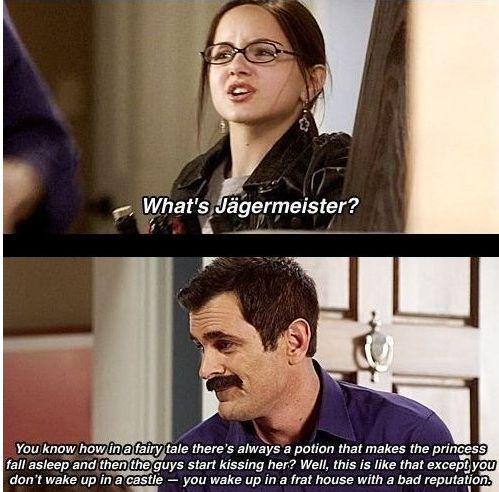
Did you read it? Did you laugh? This meme is all over my Facebook feed again this week, though it's 2 years old. Over half a million people have liked the version on Takei's page, tens of thousands sharing, and there are over 10,000 comments. The ones I saw were all positive, though I read a random sample.

My first response to this was that it was a joke about rape. The girl drinks Jagermeister, falls asleep, and then the guys start kissing her. In the morning, she wakes up in the frat house, doesn't know what happened, and then they slut shame her. But you could read it as occupying just the other side of the line - She goes to the frat house, makes a poor choice of sexual partners, regrets it in the morning, and they slut shame her.

As readers of this blog know, I think a lot about the messages we send to girls throughout their lives, though with a four-year-old daughter we're not to sexuality yet. We've just begun working on a few safety pieces about control of her body (which is hard, as now when she tells me not to tickle her, I have to stop tickling her) and that private parts are private. Right now, she thinks her butt is the funniest thing in the world, and she'd like to show it to you. These are first steps of a long complicated component of parenting.

In many ways, this silly meme encapsulates one of our major problems in the way our society, generally, talks to girls about sex. Shame, reputation, purity, alcohol, bad choices, negativity.

But fortunately, there's Scarleteen. Scarleteen provides "Inclusive, Comprehensive, and Smart Sexuality Information and Help for Teens and 20s." They get millions of hits a year, mostly from people who actually might need their help, advice, or suggestions. If you can think of a topic, from consent to bodies to mental health to how-tos (safely), to birth control and "barriers" and on and on, they have an easily findable piece. Moreover, they respond quickly to people who come to their blog or send them messages with questions. It's just an outstanding resource, and as I face the prospect of thinking about sexuality and my children, I'm glad Scarleteen is out there.

Not long ago, a friend's daughter approached other friends, looking for advice that he/she wasn't getting at home. Scarleteen (and their book) was the answer, or at least the way to begin a conversation long overdue.

Unfortunately, right now Scarleteen needs help. I've given them a donation. If you can, please do so as well. This resource needs to be nurtured by all of us who might know someone needing advice, yet too frightened or ashamed to ask the people in his or her life. Confidential, accurate, information is so important to making good choices about sexual activity. Please donate if you can.